This summer has been brutal.
We’ve had day after day of temperatures over 100 degrees here in North Central Texas, barely any rain, and the kind of heat that makes you question every life choice that involves stepping outside.
And when your garden is under that kind of stress, it really makes you think about what’s happening in the soil, not just what you can see above it.
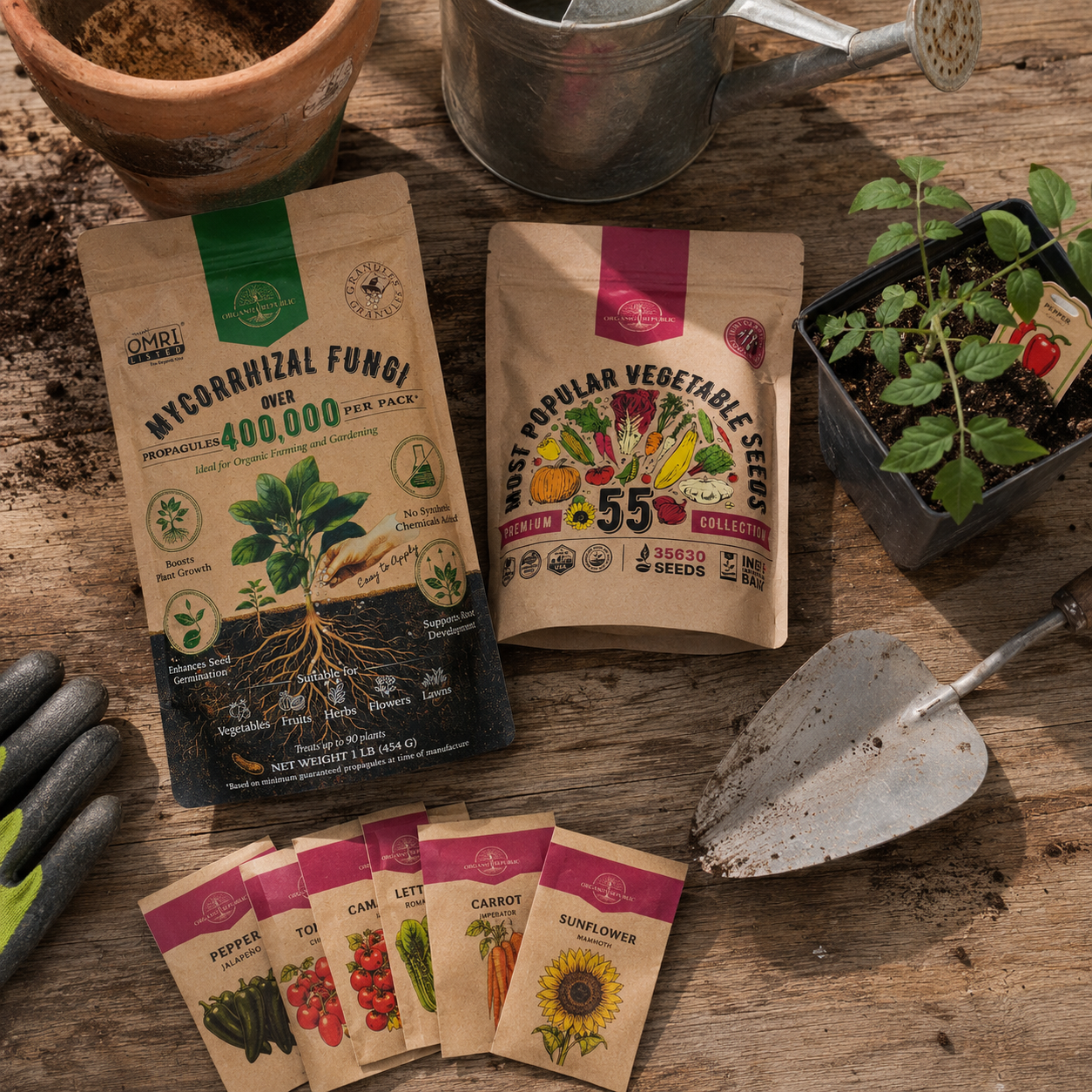
That’s part of why I was interested when Organo Republic reached out and offered to send me their Mycorrhizal Fungi Granules along with one of their large vegetable seed collections.
They sent the products to me to try, and before I put something new in my garden, I try to understand exactly what it is.
It’s been too hot for me to get out there and try it out, and just when I gathered up the nerve, I fell in the garden and possibly broke my hand… I tripped over the Zinnias that sprawled out of my Okra bed while trying to harvest some Okra – pretty much all that will produce in this heat – they LOVE it.
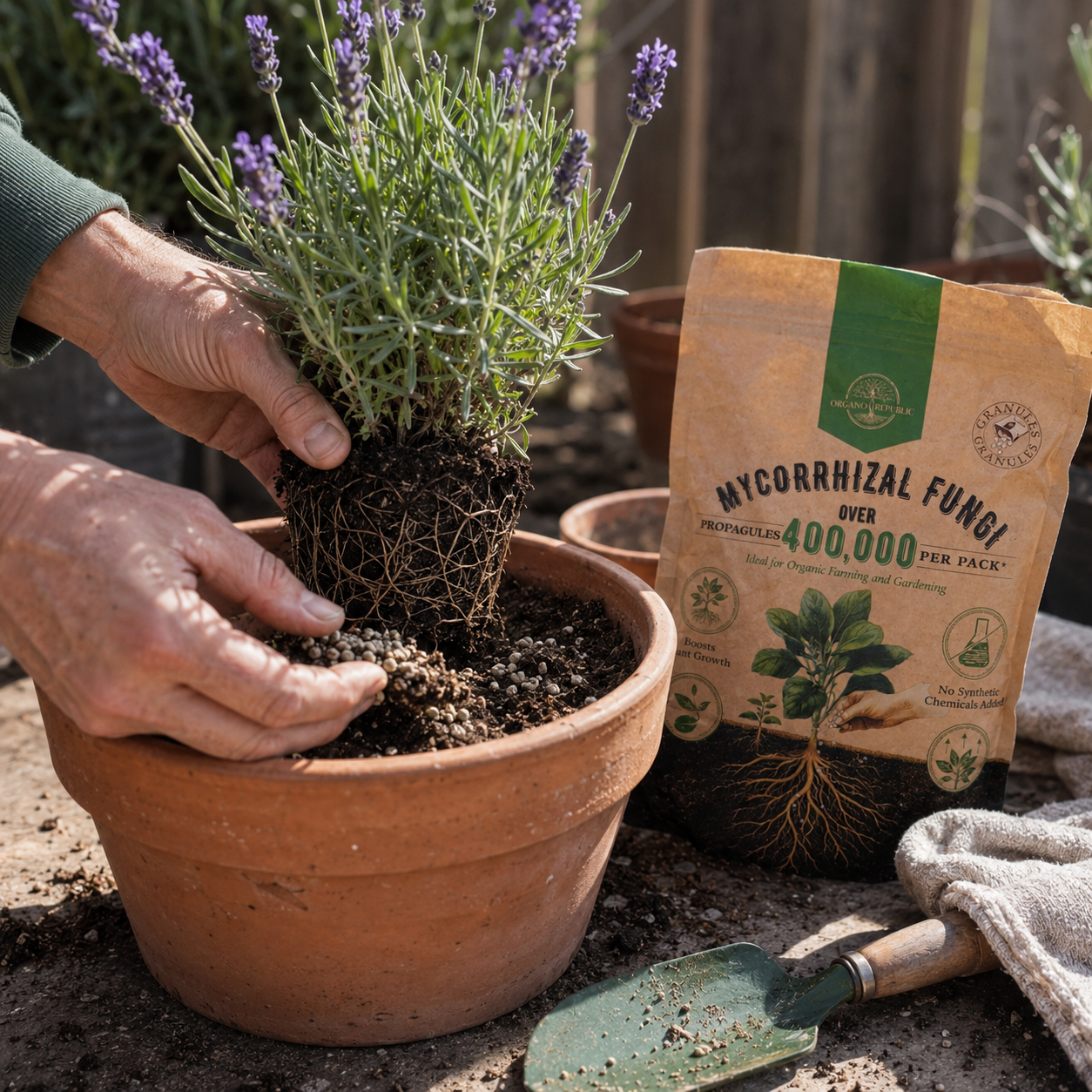
Once my hand recovers I need to transplant my Lavender and I will definitely be using this during the process. I’ll make sure to do a video when I use it, so be on the lookout for that!
What Are Mycorrhizal Fungi – and Does Your Vegetable Garden Really Need Them?
Because “mycorrhizal fungi” sounds either very scientific or like something you’d rather not find growing in your house.
Turns out, it’s actually pretty fascinating.
First, What Exactly Are Mycorrhizal Fungi?
Mycorrhizal fungi are beneficial fungi that form a relationship with the roots of certain plants.
And this isn’t some new gardening trend somebody started on TikTok.
This relationship happens naturally in healthy soil.
The fungi attach to or grow with plant roots and produce extremely fine thread-like structures called hyphae. Those threads can reach into tiny areas of soil that the plant’s own roots can’t reach as easily.
Basically, the fungi become an extension of the plant’s root system.
That gives the plant access to a larger area where it can get more water and nutrients, particularly nutrients like phosphorus and zinc. In exchange, the plant provides sugars and other compounds the fungi need to live.
Everybody gets something out of the deal.
Colorado State University Extension explains that mycorrhizae can greatly increase the root system’s effective absorbing area, helping plants access both water and nutrients.
Why Would That Matter in a Vegetable Garden?
This is the part that caught my attention.
If your plant can effectively reach into a larger area of soil, it may be better able to find what it needs.
That can matter during things like:
- drought
- periods of extreme heat
- transplanting
- nutrient stress
- establishment of young plants
Mycorrhizal fungi don’t magically make a plant drought-proof.
Believe me, if somebody invents something that makes a tomato plant even TRY to produce a tomato in Texas in August, I’ll be first in line.
But established mycorrhizal relationships can improve a plant’s ability to tolerate environmental stress, including dry conditions. They may also help lessen transplant shock.
That doesn’t replace watering, good soil, proper planting, mulch, or the rest of the things we already know matter.
Think of mycorrhizae as another part of the living system around the roots.
So What Is a Mycorrhizal Inoculant?
The fungi already exist naturally in many soils.
A commercial mycorrhizal inoculant is basically a way of deliberately introducing specific beneficial fungi right where a new plant’s roots can find them.
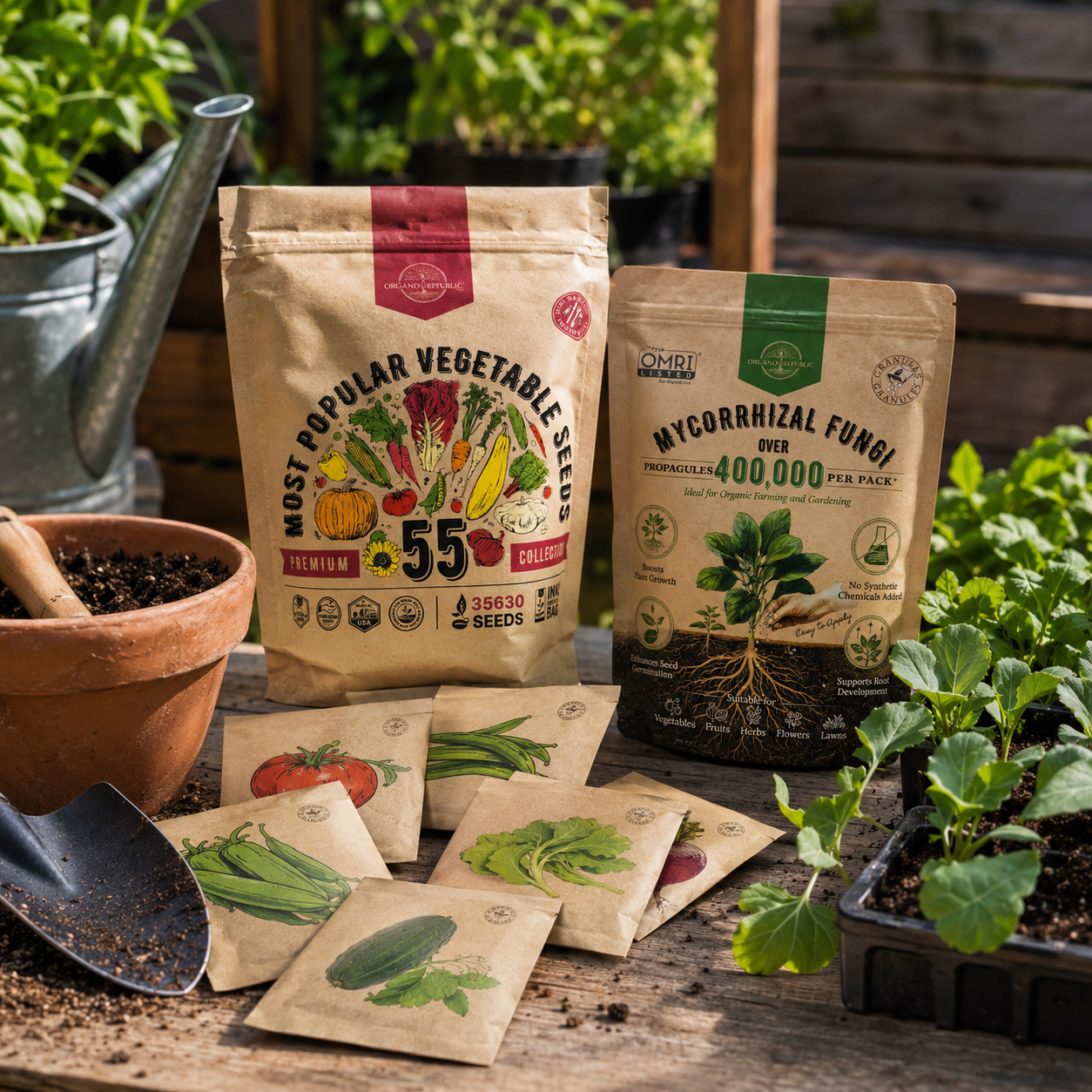
The product Organo Republic sent me is a granular inoculant.
Their 1-pound package contains two species of arbuscular mycorrhizal fungi:
Rhizophagus irregularis
Funneliformis mosseae
According to the product label, the mixture contains a minimum of:
- 700 propagules per gram of Rhizophagus irregularis
- 200 propagules per gram of Funneliformis mosseae
That works out to more than 400,000 propagules in the entire one-pound package.
The product is also OMRI Listed for use in organic production. Organo Republic says the 1-pound bag can treat up to about 90 plants.
And one important thing to keep in mind:
Mycorrhizal fungi are not fertilizer.
This product isn’t just adding nitrogen, phosphorus, or potassium to your soil.
Instead, you’re introducing living organisms that can help the plant make better use of the water and nutrients available around its roots.
That’s a very different thing.
How Do You Use Mycorrhizal Fungi?
This part is super simple.
The fungi need access to living plant roots.
Dumping some on top of the garden three feet away from your tomato plant isn’t really accomplishing the goal.
You want the inoculant in or very near the root zone.
The directions on my Organo Republic package say to use the granules when starting seedlings or when transplanting.
For Seedlings
You can mix the granules into your growing medium before planting.
Then plant your seeds or seedlings and water normally.
For Transplants
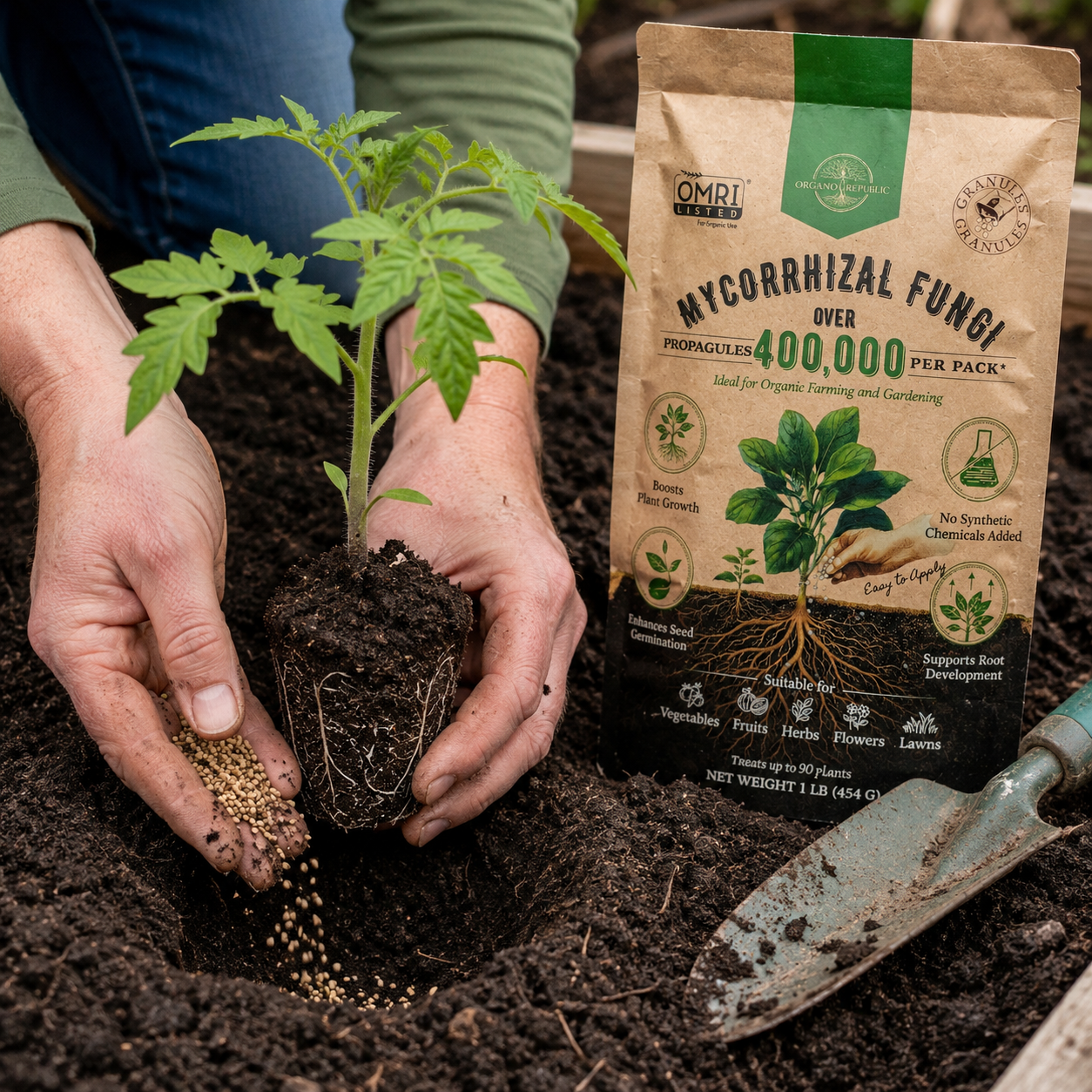
Put the granules directly into the planting hole or around the root zone.
Place your transplant into the hole, fill it back in with soil, and water thoroughly.
Organo Republic also recommends applying the product directly around the roots when planting or repotting so the fungi have the opportunity to colonize those roots.
Their label gives different amounts depending on the size of the container or plant.
For example, the package recommends about:
- 1 teaspoon for a 1-pint seedling container
- 2 teaspoons for a 1-quart container
- about ¼ cup for a 1.5-gallon container
For transplanting, the amounts range from about 1 teaspoon for a 1-gallon container to 2 tablespoons for a 7-gallon container.
You don’t need to drown the plant in it.
More isn’t automatically better.
Do All Vegetable Plants Benefit From Mycorrhizal Fungi?
No.
And I think this part gets left out far too often when these products are discussed.
Most garden plants form some type of relationship with mycorrhizal fungi, but there are exceptions.
Plants in the Brassica family generally do not form arbuscular mycorrhizal relationships.
That includes things such as:
- broccoli
- cabbage
- cauliflower
- kale
- Brussels sprouts
- mustard
Beets are another commonly mentioned non-host crop.
University of Minnesota Extension specifically identifies brassicas and sugar beets among crops that don’t support this type of mycorrhizal establishment.
That means sprinkling a commercial mycorrhizal product around your cabbage isn’t likely to give you the same benefit it might give tomatoes, peppers, squash, cucumbers, beans, or many other garden plants.
I wouldn’t waste it where it can’t do much.
What About Tomatoes and Peppers?
These are exactly the kinds of plants where I find this especially interesting.
Tomatoes and peppers generally develop large root systems, and they’re often transplanted into the garden rather than direct-sown.
That means there’s a perfect opportunity to put a small amount of inoculant right in the planting hole where the young roots can encounter it.
Squash, cucumbers, melons, corn, beans, peas, many herbs, fruit plants, flowers, shrubs, and trees can also form mycorrhizal associations.
Does Mycorrhizae Mean You Can Stop Fertilizing?
Nope.
Wouldn’t that be nice?
Mycorrhizal fungi may improve a plant’s ability to access nutrients already present in the soil, but they don’t create an unlimited supply of nutrients.
If your soil is deficient, the fungi can’t pull phosphorus or other nutrients out of thin air.
This is one reason I always come back to soil health.
Compost, organic matter, moisture, oxygen, soil structure, microbial life – all of these things work together.
There’s just not one magic product that fixes everything.
Does Every Garden Need a Commercial Mycorrhizal Product?
Here comes the gardening answer nobody likes:
It depends.
Mycorrhizal fungi already occur naturally in many healthy soils.
So if you have biologically active garden soil that you’ve been improving for years with compost and organic matter, it’s entirely possible that beneficial fungi are already living there.
“Commercial inoculants can be helpful when the appropriate organisms are lacking, but researchers have found mixed results when additional mycorrhizae are introduced into soil where natural populations already exist.”
That’s important.
I don’t want anyone reading this and thinking:
“My tomatoes aren’t producing enough. Obviously I forgot the mushroom dirt.”
Gardening isn’t that simple.
Mycorrhizal fungi are just one piece of an enormous underground ecosystem.
When Does Using a Mycorrhizal Inoculant Make the Most Sense?
There are several situations where I think it’s a great time to use one.
Starting a New Garden
If you’re planting into newly created beds, commercial soil, disturbed ground, or soil that hasn’t supported much plant life, adding beneficial microorganisms at planting makes sense.
Container Gardening
Potting mixes don’t necessarily contain the same biological community you’d find in established garden soil.
Adding an inoculant at planting gives those roots an opportunity to develop that relationship from the beginning.
Transplanting
This is probably where I personally find it easiest to use.
You’re already digging the hole.
You’re already handling the roots.
Put the recommended amount where the roots can contact it, plant, water, done.
Heavily Disturbed Soil
Construction, repeated tilling, erosion, prolonged bare soil, soil compaction, and other disturbances can affect soil biology.
Gardens Under Environmental Stress
And yes, this is where my Texas summer enters the conversation.
Anything that potentially helps roots explore a greater volume of soil for water is worth understanding when you’re gardening through extended hot and dry weather.
Again, it doesn’t replace irrigation.
But a healthier and more extensive root system is certainly not a bad thing.
What Organo Republic Sent Me
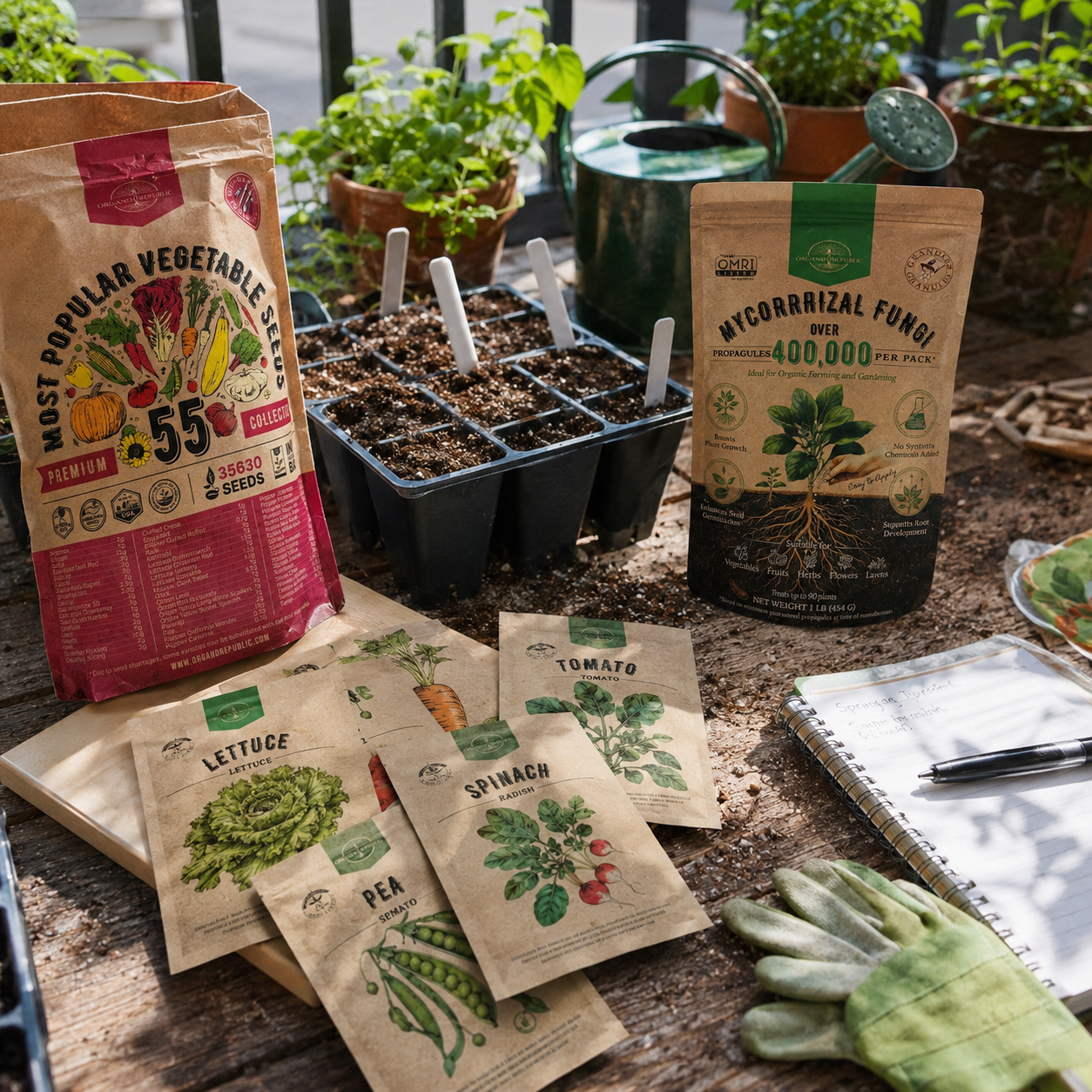
Along with their Mycorrhizal Fungi Granules, Organo Republic sent me their 55 Most Popular Vegetable Seeds Collection.
And this thing is not a tiny little sampler.
The bag contains more than 35,000 seeds, divided into individual seed packets.
There are vegetables for just about every corner of a garden, including different varieties of:
- tomatoes
- peppers
- squash
- pumpkin
- lettuce
- radishes
- onions
- cucumbers
- carrots
- peas
- eggplant
- okra
- spinach
- Swiss chard
- kale
- sunflower
- turnips
and quite a few more.
Organo Republic describes its seed collections as heirloom, non-GMO seed varieties, and the company sells a number of large vegetable and herb collections for home gardeners.
For someone starting a vegetable garden – or someone like me who always manages to find room for “just one more thing” – it’s a lot of growing possibilities in one bag.
One Thing I Wouldn’t Do
I wouldn’t automatically use the fungi with every seed in this collection simply because they came together.
Remember that kale and some of the other brassica-family vegetables aren’t good candidates for this particular fungi relationship.
Instead, I’d save the inoculant for the plants that can actually use it.
That’s also one reason I like understanding what a gardening product does instead of just following the “sprinkle this everywhere” school of gardening.
Your garden doesn’t need more products.
It needs the right things in the right places for the right reasons.
How Long Do Mycorrhizal Fungi Last?
Once the fungi successfully colonize living roots, the relationship can continue as long as conditions support both the plant and fungi.
That doesn’t necessarily mean you’ll need to keep pouring more product around an established plant every few weeks.
The main opportunity is usually when you’re planting or transplanting and can get the inoculant directly against the roots.
For new plants later on, you can inoculate those separately.
How Should You Store Mycorrhizal Fungi?
This is a living product, so storage matters.
The Organo Republic package says to keep the granules:
- in a cool place
- dry
- out of direct light
- tightly closed
- between roughly 40°F and 77°F
- and do not freeze them
My package has a Best By date of May 2029, so this isn’t something you have to use all at once.
That’s especially handy because one pound is quite a bit for a backyard gardener.
What I Like About This Idea
What I find most interesting about mycorrhizal fungi isn’t really the product.
It’s the reminder that a huge amount of what determines whether our plants thrive is happening where we can’t even see it.
We tend to pay attention to leaves.
Are they yellow?
Are there holes?
Is something eating them?
Are the tomatoes setting fruit?
Meanwhile, under the ground is this complicated living network of roots, fungi, bacteria, water, minerals, organic matter, insects, and organisms constantly interacting with one another.
Healthy gardening really starts there.
And the more I learn about soil, the more convinced I am that gardeners spend way too much time trying to feed plants and not enough time thinking about how to build a healthy environment around the roots.
Will I Be Using the Organo Republic Mycorrhizal Fungi?
Yes.
The easiest place for me to use it will be with transplants because I can put it directly where it needs to be – in contact with the roots.
I’m particularly interested in trying it with tomatoes, peppers, cucumbers, squash, and some container plants.
I don’t expect fireworks.
And I’m certainly not going to look at a plant three days later and announce that a teaspoon of fungi transformed my garden.
That’s not how I garden.
What I want to see is how the plants establish, how their root systems develop, and how they perform over time.
I’ll take that over a miracle claim any day.
The Bottom Line
Mycorrhizal fungi aren’t snake oil.
They’re a real and important part of natural soil biology.
The relationship between these fungi and plant roots can improve a plant’s access to water and nutrients and can help plants tolerate some environmental stresses.
But that doesn’t mean every garden needs a commercial inoculant.
If you already have healthy, biologically active soil, you may already have plenty of beneficial fungi doing their job.
If you’re starting plants in containers, creating new beds, transplanting into disturbed soil, or simply trying to encourage good root establishment, an inoculant like the Organo Republic Mycorrhizal Fungi Granules is a great tool to have available.
And that’s really how I look at products like this.
Not as magic.
Not as something every gardener absolutely has to buy right now.
Just another tool – and one that makes a whole lot more sense once you understand what’s actually going on in the dirt.
🛒 Shop My Favorite Gardening Finds
Looking for the products and tools mentioned in my blog posts and YouTube Gardening videos?
Visit my Amazon shop to see everything in one place.
Shopping there is free and the site gets a percentage of sales. Thanks!


Leave a Reply