If you’ve spent more than five minutes scrolling garden photos online, you’d think growing vegetables requires a big budget and a matching aesthetic. Perfect beds. Coordinated planters. Everything lined up like it’s posing for a magazine spread.
Meanwhile, real gardeners are standing in the yard thinking, I just want tomatoes. I don’t want a second mortgage.
Here’s the honest truth. Vegetables don’t care what they’re planted in. They care about soil, sun, fertilizer, and whether someone remembers to water them once in a while. That’s it. Once you let go of the idea that your garden has to look a certain way, growing food gets cheaper and a whole lot easier.
Designer Gardens Are Overrated
There’s nothing wrong with a pretty garden. But pretty doesn’t automatically mean productive, and expensive definitely doesn’t mean better.
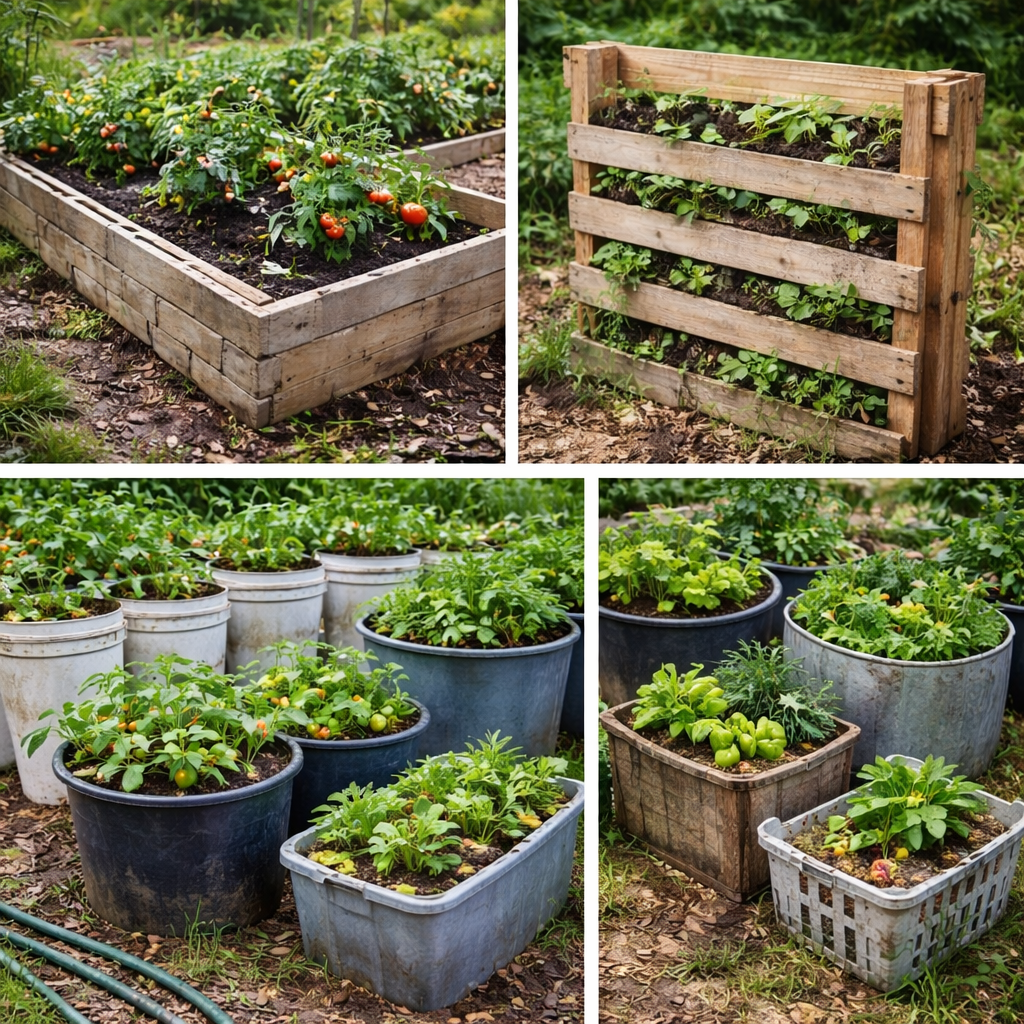
A pallet bed growing peppers feeds you the same way a fancy cedar bed does. A five-gallon bucket full of tomatoes tastes just as good as one grown in an expensive planter. Lettuce doesn’t know or care if everything matches.
Once you stop chasing the look and start chasing the harvest, gardening feels less stressful and way more doable.
Pallet Beds Are Not Trash
Pallets are everywhere. Garden centers. Hardware stores. Warehouses. Construction sites. Behind stores that get regular deliveries. Most places are happy to have someone take them.
A basic pallet can turn into a shallow raised bed, a framed garden box, or even a vertical planting space. And broken pallets are still useful. Those boards can be pulled apart and reused to frame beds or shore up the sides of containers.
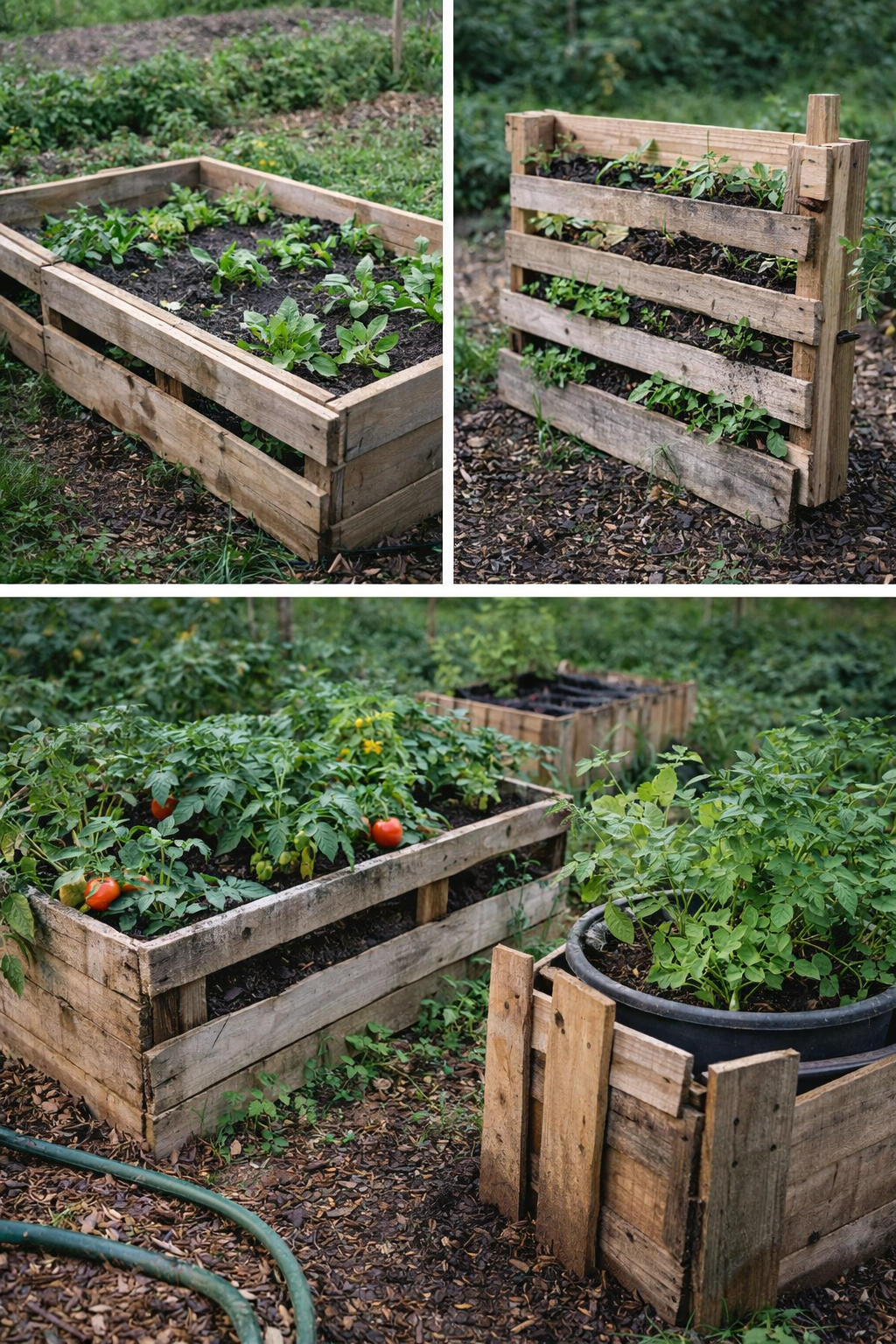
You do want to avoid pallets soaked in mystery chemicals or marked with sketchy stamps. But plain, untreated pallets work just fine when they’re used smartly.
One of the best things about pallet beds is that they’re low pressure. You build them. You fill them. You plant them. If a board warps or cracks later, you fix it or swap it out and move on. No guilt. No drama.
Buckets, Tubs, and Jugs Work Just Fine
Here’s the rule. If it can hold soil and drain water, it can grow vegetables.
Five-gallon buckets are the real MVP of frugal gardening. Bakeries, delis, donut shops, and grocery store bakeries give them away all the time. Drill a few holes in the bottom and you’ve got a container that works for tomatoes, peppers, herbs, and even carrots if the bucket’s deep enough.
Large storage tubs work too. So do old planters nobody wants anymore. Laundry baskets lined with fabric. Milk jugs cut open for greens and herbs.
And honestly, mixing container sizes usually works better than trying to make everything match. Bigger containers hold moisture longer. Smaller ones warm up faster. Together, they help keep the whole garden from drying out at once.
This Kind of Garden Is Easier to Keep Up With
Frugal gardens aren’t just cheaper. They’re usually easier, too.
Containers can be moved closer to the house. Pallet beds can be built high enough that you’re not on your knees all season. Buckets can be grouped where watering is simple. And if something isn’t working, it’s easy to change without tearing the whole garden apart.
When life gets busy, these gardens forgive you a lot more than big, high-maintenance setups ever will.
Keep Track Without Turning It Into Homework
When you’re using a mix of pallet beds, buckets, tubs, and whatever else shows up, it helps to keep simple notes. Nothing fancy. Just enough so you’re not standing there in July wondering what on earth you planted where.
A basic garden journal can help you remember what worked, what didn’t, and what’s worth repeating next year so you’re not starting from scratch every spring.

Grow Food, Not Approval
You don’t need matching containers. You don’t need expensive materials. You don’t need a picture-perfect backyard.
You need dirt, seeds, sunlight, and a setup that fits your real life.
Pallets. Buckets. Tubs. Scrap wood. Found containers.
If it grows food, it counts.

🛒 Shop My Favorite Gardening Finds
Looking for the products and tools mentioned in my blog posts and YouTube Gardening videos?
Visit my Amazon shop to see everything in one place.
Shopping there is free and the site gets a percentage of sales. Thanks!


Leave a Reply