My lavender has been struggling in a plastic pot, and I have a big terra cotta pot sitting empty. That got me thinking about something that’s easy to overlook when we’re planting: are we choosing a pot that suits the plant, or just using whichever one happens to be available?
I’ve certainly done the second one. Here’s a plant, here’s a pot, let’s get this thing growing. I mean sure – I do make sure the roots have enough space to grow properly – but, is that the only thing I should be thinking about?
Let’s look at it this way: lavender and basil don’t want exactly the same conditions. Neither do a tomato plant and a little clump of chives. The container can make meeting those needs easier or turn watering into a guessing game.
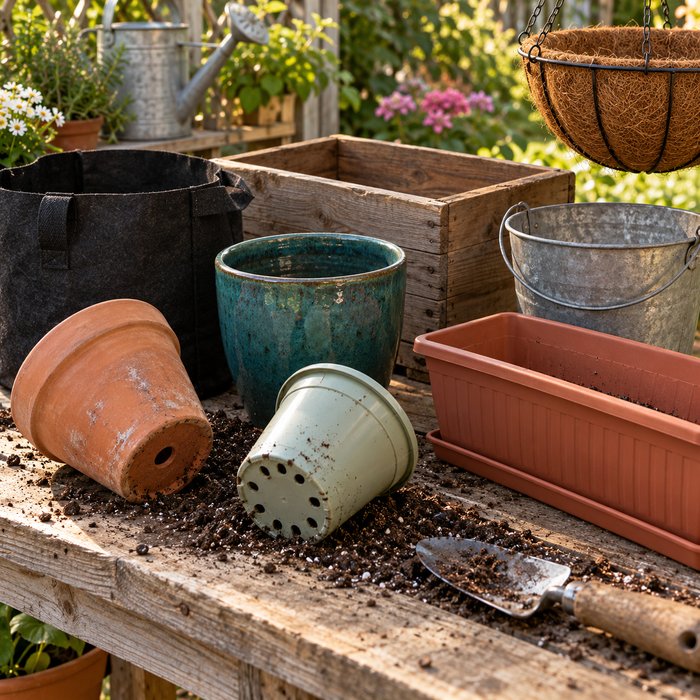
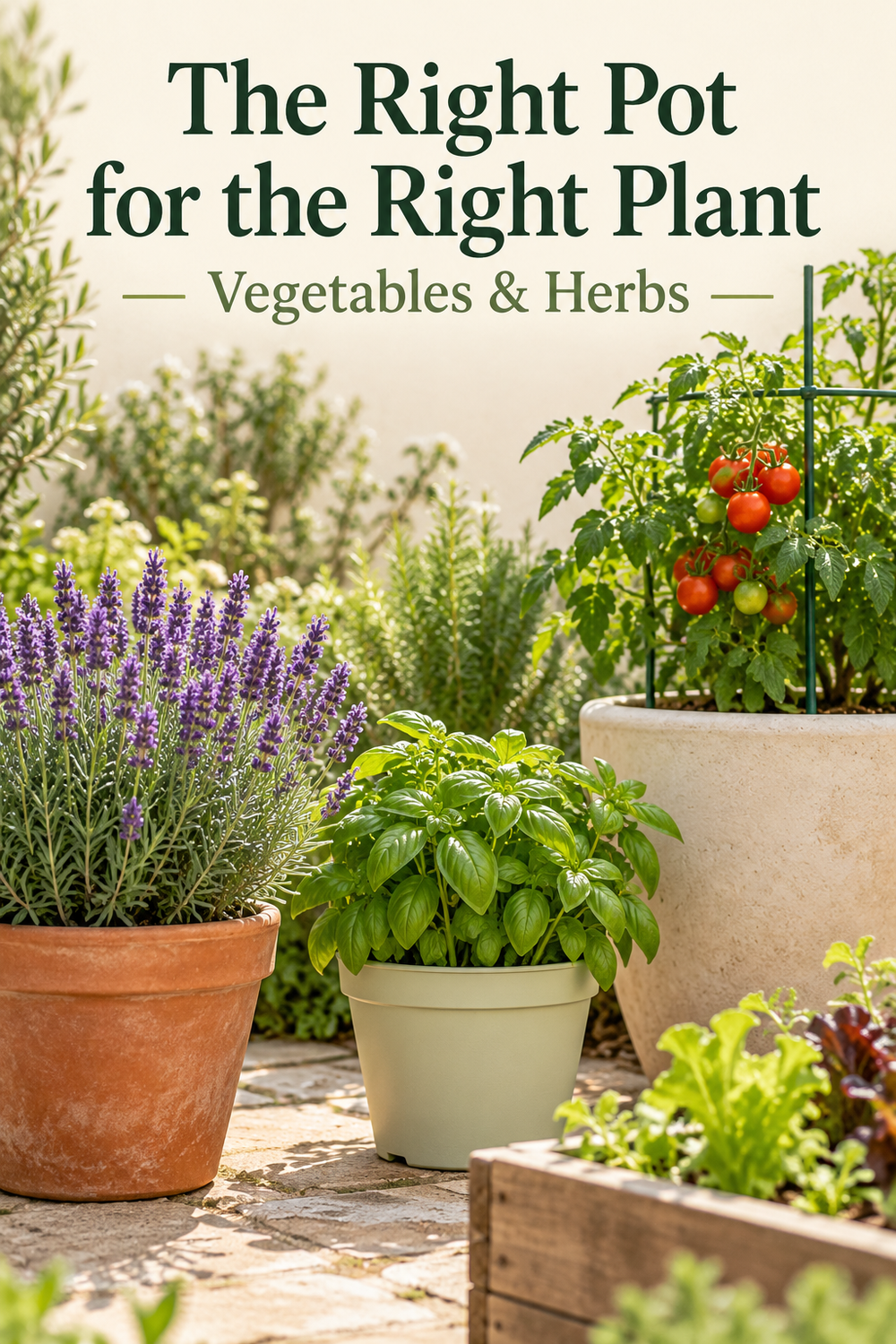
The Right Pot for the Right Plant: Choosing Containers for Vegetables and Herbs
So let’s talk about choosing pots for vegetables and herbs, including grow bags, hanging baskets, stackable planters, and when you’re better off giving a plant space in the ground.
Start With the Plant, Then Choose the Pot
Before you look at colors and pretty designs or where it might look the best in your garden, ask three questions:
1. How big will this plant get?
2. How much root space does it need?
3. Does it prefer steady moisture or a chance to dry between waterings?
That little tomato transplant won’t stay little. Its final container needs to support a full-grown plant, fruit, and a cage or stake. A low, wide lettuce planter has a different job.
Also think about your own routine. If you can check pots every day, you’ll have more options. If you’re away often or watering is difficult, a tiny pot that dries quickly may make gardening harder than it needs to be.
Why Terra Cotta May Help My Lavender
Unglazed terra cotta is porous. Moisture can escape through its walls, so the potting mix generally dries faster than it would in plastic or glazed ceramic.
That can help with lavender, which needs excellent drainage and doesn’t do well with roots kept constantly wet. Rosemary, thyme, and sage are other herbs that appreciate well-drained conditions.
But the pot material is only part of the decision. My empty terra cotta pot still needs an open drainage hole, a suitable potting mix, and a size that fits the lavender’s roots. If it’s enormous compared with the root ball, all that extra damp mix could create another problem.
And plastic isn’t automatically bad for lavender. You can grow it in plastic if the mix, drainage, and watering are right. Terra cotta simply gives you a different drying pattern to work with.
I wouldn’t repot a struggling plant and assume the job is done. I’d check how wet the old mix is, whether water can escape, and whether the plant has healthy roots. A different pot can improve growing conditions; it can’t undo every possible cause of poor growth.
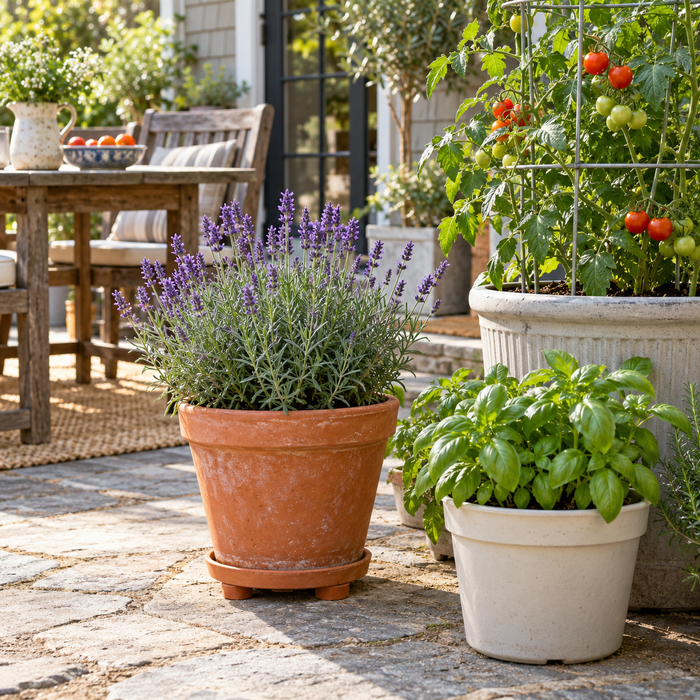
Choose Enough Root Space for a Real Harvest
A plant fitting through the opening doesn’t tell you whether the pot is big enough. Look at both the depth and how much potting mix it holds.
Here are practical starting points for a home container garden. They’re roomy targets rather than promises that every variety needs exactly the same pot. A plant tag with a specific container recommendation should help guide you, too.
| Plant | Practical Container Starting Point | What to Keep in Mind |
|---|---|---|
| Compact or dwarf tomato | About 5 to 10 gallons for one plant | Choose a container variety and provide support. |
| Large, full-size tomato | About 10 to 20 gallons or more for one plant | A bigger pot makes managing a large plant easier. |
| Pepper or eggplant | At least 5 gallons for one plant; more room is useful | Leave room for its mature roots and foliage. |
| Compact cucumber | About 5 to 10 gallons for one plant | Allow space for a trellis and check watering closely. |
| Leaf lettuce, arugula, spinach | A wide planter with about 6 to 8 inches of usable mix depth | Space plants for the size you plan to harvest. |
| Carrots | About 10 to 12 inches of mix depth, or deeper for long varieties | Root length matters; choose shorter carrots for shallower pots. |
| Small radishes and green onions | About 6 to 8 inches of usable mix depth | Thin seedlings rather than crowding them. |
| Basil, cilantro, mint, oregano, thyme | Roughly 2 to 5 gallons, depending on mature size | Keep mint in its own pot; small pots need closer attention. |
| Established rosemary or lavender | Often a 5-gallon or larger container as the plant matures | Match a young plant’s pot to its current root ball first. |
| Summer squash | About 10 gallons or more for one compact plant | A garden bed may be easier for larger varieties. |
Remember that decorative height isn’t the same as growing depth. A tall planter with a raised insert may only hold a shallow layer of mix. Check inside before buying it for carrots or a big tomato.
Download printable copy of The Right Pot Size For Your Plant <— here
Which Pot Material Should You Choose?
Different materials change how fast the mix dries, how heavy the pot becomes, and how well it suits the spot where you’ll put it.
| Container Type | Where It Can Be Useful | What to Watch |
|---|---|---|
| Unglazed terra cotta or clay | Herbs that benefit from drying between waterings | Dries quickly, gets heavy, and can crack in freezing weather. |
| Plastic | Vegetables and herbs needing steadier moisture; pots you need to move | Check drainage and avoid exposing dark pot walls to harsh sun. |
| Glazed ceramic | Decorative herb or vegetable pots with proper drainage | Holds moisture longer than unglazed clay and can be very heavy. |
| Fabric grow bag | Seasonal vegetables where you want a roomy, portable container | Porous sides can increase drying; a filled bag is still heavy. |
| Wood or half barrel | Larger vegetables or a thoughtfully spaced mixed planting | Needs drainage and suitable wood; won’t last forever. |
| Metal | A sturdy planter in a location where root-zone heat is managed | Can heat in direct sun; a decorative bucket may lack drainage. |
| Concrete or stone | A permanent, stable growing spot | Very heavy; choose the location before filling it. |
| Resin or fiberglass | Larger planters that are lighter than stone or ceramic | Construction varies; check drainage, thickness, and usable capacity. |
There isn’t one material every plant prefers. A porous pot may help if your mix stays wet too long. A moisture-holding pot may help if your vegetables keep drying out. Either way, the watering still has to fit the plant.
Download printable copy of The Right Pot Material For Your Plant <— Here
Drainage Comes Before Decoration
For an ordinary pot, excess water needs a way out. If a beautiful ceramic container has no drainage hole, use it as an outer cover for a separate pot that does.
Take the inner pot out to water it, let it drain, and empty any water collecting in the outer container. Don’t let the roots sit in a hidden puddle.
And skip the thick layer of rocks at the bottom. Rocks don’t turn a holeless pot into a draining pot, and a gravel layer beneath potting mix doesn’t improve drainage. It also takes away space you could have given the roots.
Pot feet can help keep a bottom opening clear when a container sits on a flat patio. Check saucers, too. Collecting runoff is handy; leaving the plant standing in it is another matter.
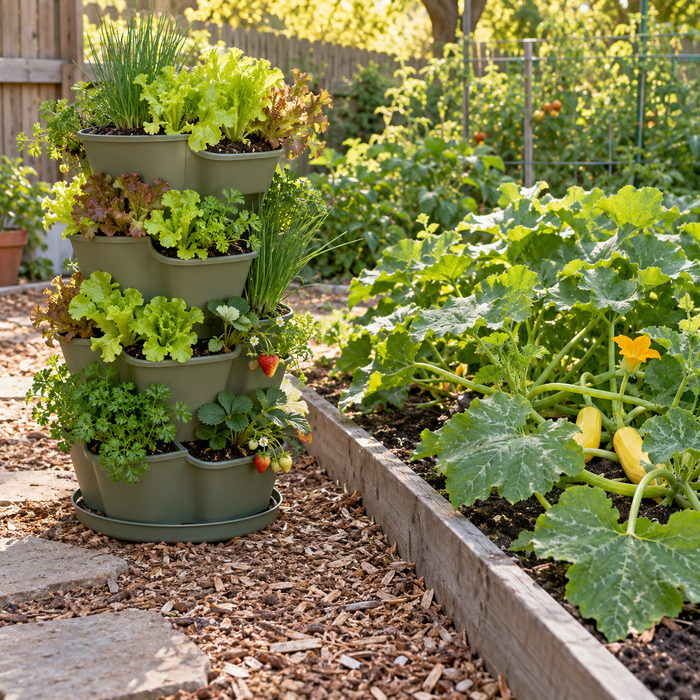
When Self-Watering Planters Make Sense
A proper self-watering planter has a reservoir, a way for moisture to reach the mix, and an overflow outlet. It’s more than a regular pot with water trapped underneath it.
These can be useful for thirsty vegetables and herbs, such as tomatoes, peppers, basil, and salad greens, when the planter has enough root space and the right growing mix for its design.
For lavender and other herbs that prefer a drying period, I’d lean toward a freely draining pot instead. Constantly replenished moisture may make it harder to give them suitable conditions.
Self-watering doesn’t mean you can plant it and forget it. You’ll still check the reservoir, keep the overflow clear, and follow the planter’s instructions for watering new transplants and managing fertilizer.
What Belongs in a Stackable Planter?
Those towers look like a wonderful way to fit a garden into a small space. I’ve had less luck getting strawberries to agree with the pictures.
The important measurement is the root space available in each tier or pocket. Some systems provide a substantial shared growing area. Others are small stacks with shallow pockets. They shouldn’t all be treated as the same kind of garden.
For a small tower, I’d start with leaf lettuce, chives, green onions, or modest herb plants that fit the pockets. Strawberries can work when they have enough root space, light, and consistent moisture. A narrow tower isn’t where I’d start a full-size tomato, squash plant, or large rosemary bush.
Check moisture at several levels instead of assuming water poured into the top reaches everything evenly. Also notice which pockets get sunlight and which are shaded by the tower or plants above them.
You don’t have to fill every opening. A few plants you can harvest are more useful than a tower packed with plants competing for too little room.
Hanging Baskets, Window Boxes, and Rail Planters
These can make excellent little gardens, but they tend to offer less room than a big patio pot.
A window box or railing planter can be useful for salad greens, small herbs, or green onions if it has enough depth. A large hanging basket can hold strawberries or a tomato variety specifically bred for basket growing.
I also use these on my porch to draw pollinators for my veggies. I grow flowers in these – easy flowers that attract pollinators.
Check the basket’s capacity rather than assuming any cherry tomato will fit. Some cherry tomatoes grow into enormous plants.
Hanging containers also get more exposure to wind, and porous basket liners can dry quickly. Place them where you can comfortably check the mix and water them. Make sure the hook or railing attachment supports the container when it’s full and wet.
An Elevated Planter Isn’t Always a Raised Bed
A planting box on legs is wonderful if bending is difficult, but its roots are still limited to whatever that box holds. Choose crops for its actual depth.
A bottomless raised bed sitting on suitable soil can let roots extend into the ground below. A shallow box with a solid bottom can’t.
Both can be useful. You just want to know which one you’re choosing before planting something that needs a deep root system.
When a Plant May Do Better in the Ground
If you have a sunny garden area with suitable soil and drainage, some crops are simply easier there.
Full-size pumpkins, watermelons, and sprawling squash use a lot of space. You can find compact varieties for large containers, but a regular sprawling variety may be much less work in a bed.
Sweet corn is another crop I’d give garden space. It needs a group of plants for good wind pollination, so a lone corn plant in a pretty pot isn’t a practical way to get a dependable harvest.
Large tomatoes can grow well in substantial pots, but ground planting may reduce the constant watering attention they need. Established perennial herbs can also benefit from room to spread when the site suits them.
The key words are “when the site suits them.” Lavender in a poorly drained patch of clay may do worse than lavender in a properly managed container. A raised bed, mound, or pot can be the better choice when drainage is a problem.
And I’d keep mint in a container. It’s useful in the kitchen, but I don’t need it deciding the entire garden belongs to it. Holy Basil does the same – I planted some years ago and now it grows like a weed everywhere.
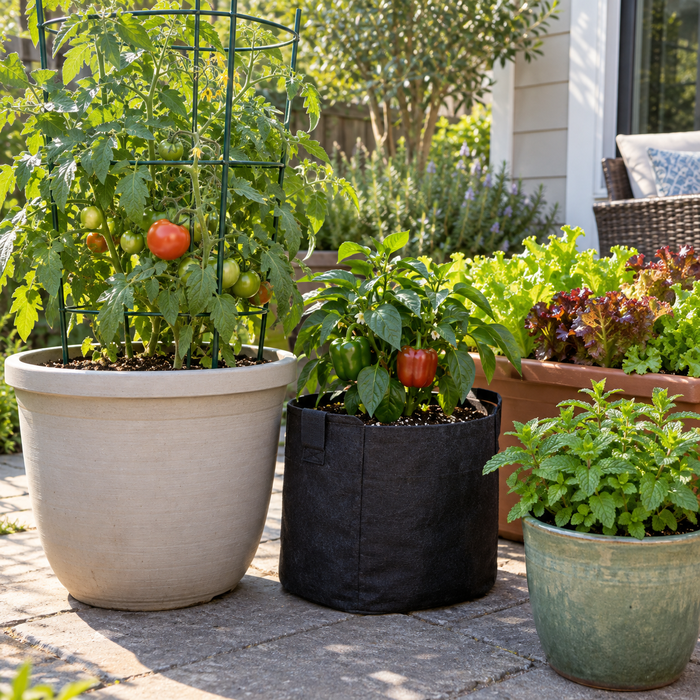
Practical Ways to Use the Containers You Already Have
Before buying anything, look at what you’ve got and match it to a sensible job.
- Give an unglazed terra cotta pot to lavender, thyme, or another herb that benefits from drying between waterings, provided the pot fits its roots.
- Use a roomy plastic or glazed pot for basil when you want moisture to last longer between checks.
- Put one pepper in a clean food-grade 5-gallon bucket with drainage openings. Use buckets with a known history, not old paint or chemical containers.
- Give a large grow bag to one tomato, then add its support while the plant is small.
- Use a window box for cool-season salad greens rather than squeezing a large fruiting vegetable into it.
- Keep mint in a separate container where you can watch for stems escaping into nearby soil.
- Use a half barrel for a compact vegetable or several smaller plants with similar watering needs, allowing room for their mature size.
- Turn a small stackable tower into a modest herb or salad garden before expecting it to feed the neighborhood.
You don’t need an expensive matching set. You need containers that help you grow the plants you actually want to eat.
Don’t Let the Pot Do All the Work
Fill containers with potting mix intended for container growing. Soil dug from the yard can become too compacted in a pot, even when the pot itself is a good choice.
Match the mix to the plant, too. A product designed to hold extra moisture may be handy for thirsty vegetables but a poor fit for a herb you’re trying to keep from staying wet.
Here in Texas, I also think about the sun hitting the pot itself. Light-colored containers or shading the container walls can help reduce heat buildup while the plant’s leaves still get the light they need.
Group pots for convenience, but check them individually. Basil in plastic and lavender in terra cotta shouldn’t automatically get the same drink just because they’re sitting beside each other.
If you’re planting herbs together, match their light, moisture, and space needs. A row of separate pots can be much easier to manage than one crowded herb bowl with plants wanting different things.
Choose a Pot That Makes Gardening Easier
My lavender has reminded me to pay attention to the container instead of assuming any empty pot will do.
I want a pot that fits the plant, lets excess water escape, and helps me manage moisture in the weather I actually have. Sometimes that’s terra cotta. Sometimes it’s plastic, a grow bag, a tower, or a big wooden planter.
And sometimes the kindest thing you can do for a plant is give it a good spot in the ground.
Before planting, ask yourself: can this container support the plant when it’s full-grown, and can I keep its roots in the conditions it needs? That’s a much better starting point than finding out halfway through summer that the pot was cute and the tomato is miserable.
🛒 Shop My Favorite Gardening Finds
Looking for the products and tools mentioned in my blog posts and YouTube Gardening videos?
Visit my Amazon shop to see everything in one place.
Shopping there is free and the site gets a percentage of sales. Thanks!


Leave a Reply