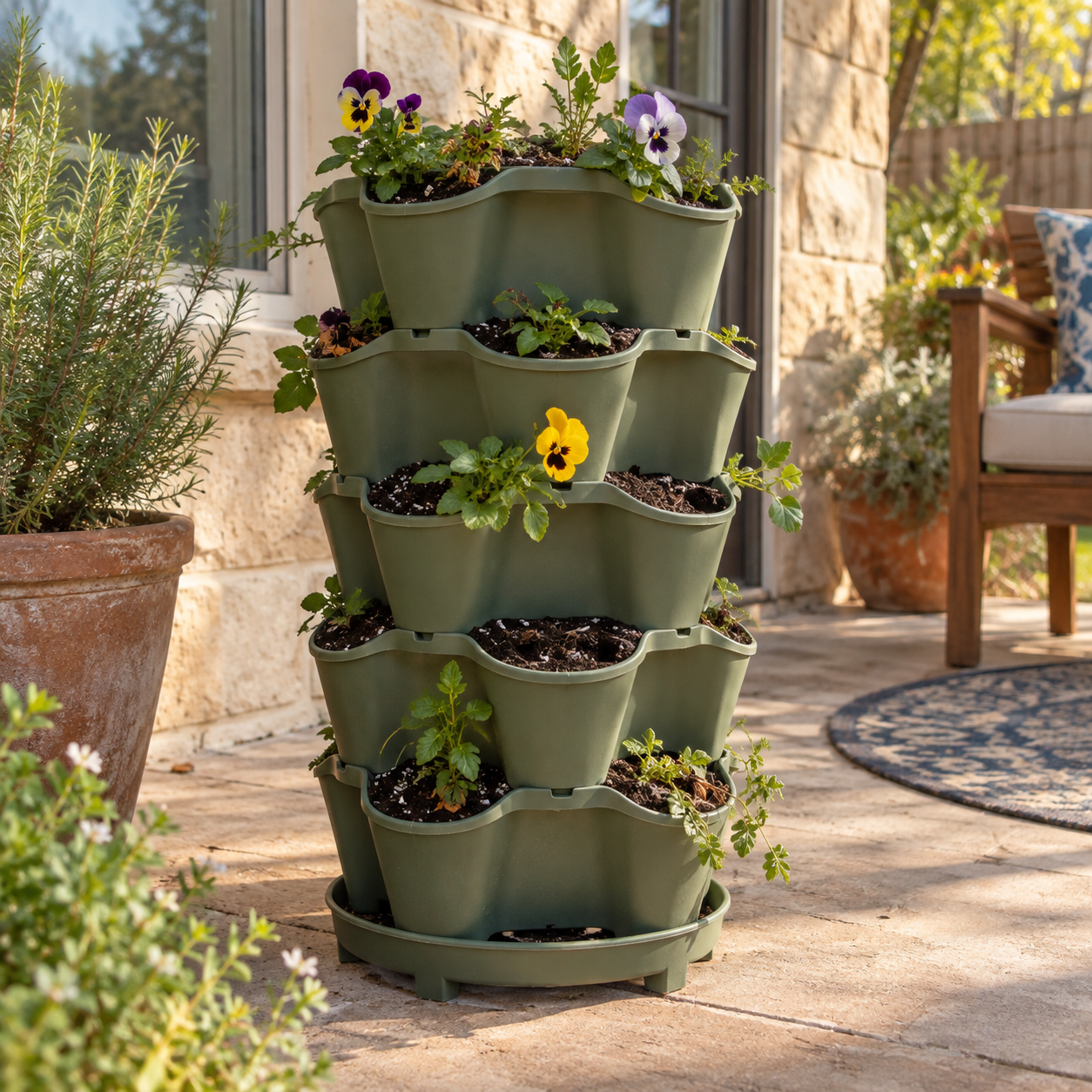
A few years ago, my husband gave me one of those stackable planters for Christmas. I thought it would be perfect for strawberries. You know the pictures: berries hanging out of every pocket, enough to make you think you’ll never need to buy another carton.
I bought strawberry plants and filled mine up. Not one lived.
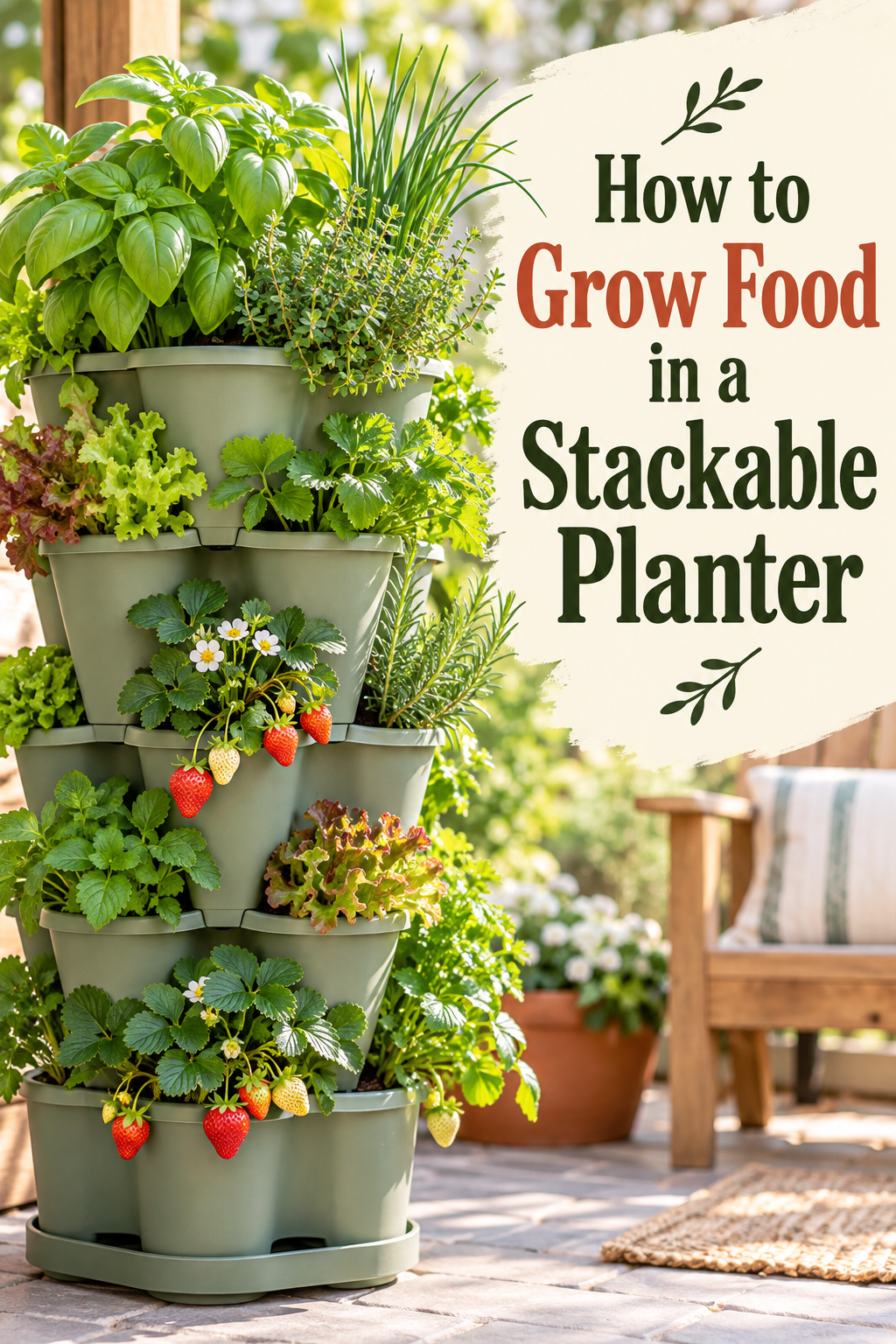
How to Grow Food in a Stackable Planter That Actually Produces
Meanwhile, a few pansies self-seeded in there and did just fine. Apparently, the planter and I can grow flowers when neither of us is trying.
I still want to grow food in it, so I looked into what these planters really need. The biggest thing I’ve learned is that a stackable planter isn’t one big pot. It’s a collection of small planting pockets, and each one can have different conditions.
First, Find Out Where the Water Goes
Many stackable planters are designed so you can pour water into the top and let it travel downward. That sounds wonderfully simple. But I noticed, on mine, not every pocket gets the same amount of water.
Before you plant, fill the tower with potting mix and water it through the top as directed. Give it time to drain, then check the mix with your finger in pockets on the top, middle, and bottom. Check different sides, too.
If one pocket is wet and another is barely damp, now you know. You can water the dry pockets directly at the soil level instead of repeatedly soaking the entire tower.
Keep doing those checks after planting. The top and the side facing the sun may dry faster than the lower, shaded pockets. Hot, windy days will change things again. There isn’t one magic instruction like “water every three days” that works for every tower and every season.
You want the mix to stay appropriately moist for what you’re growing, while still allowing excess water to drain. A wilted plant can be thirsty, but it can also wilt when its roots have stayed too wet. Feel the mix before deciding what it needs.
Give the Roots Something Good to Grow In
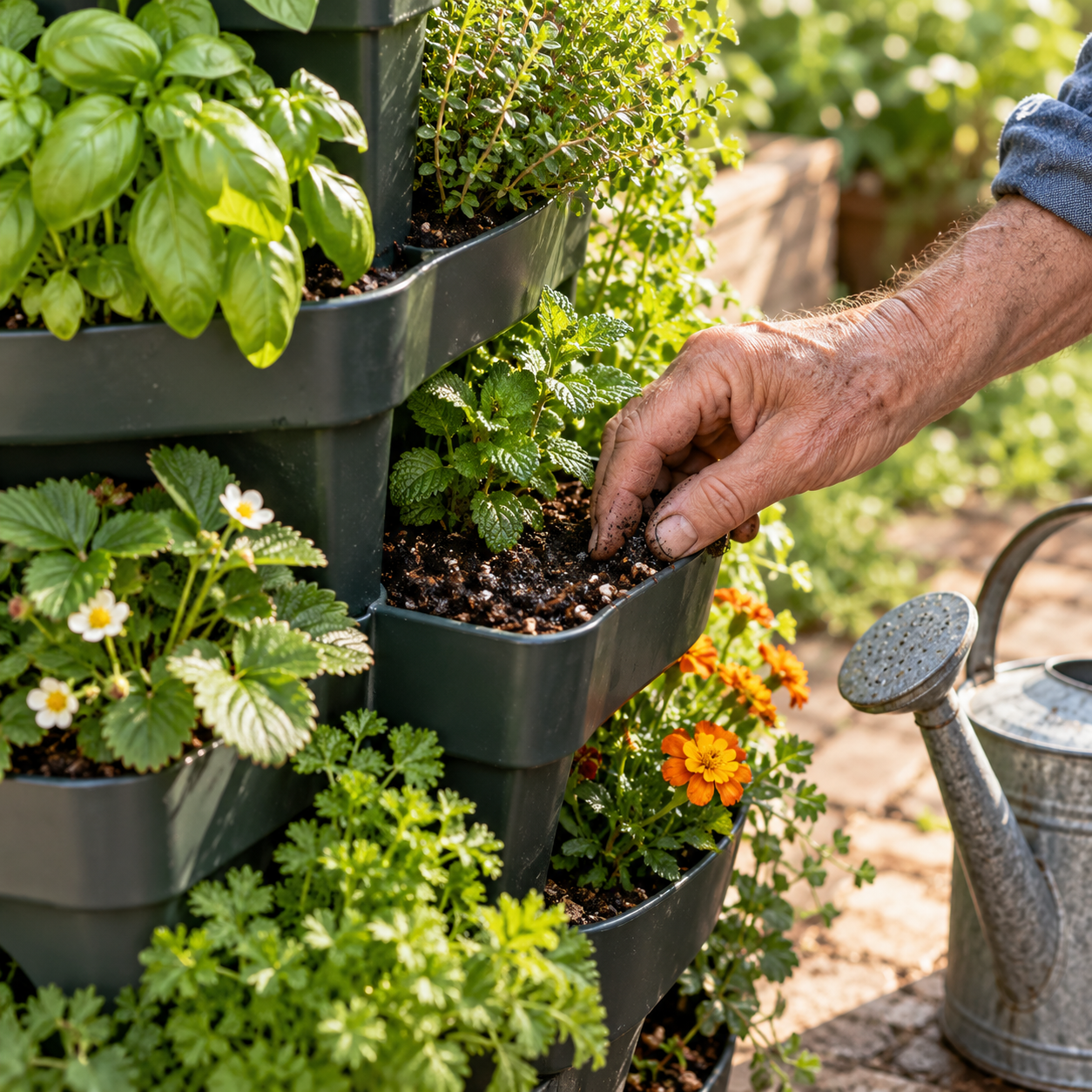
Start with potting mix made for containers, not soil dug from the yard. Garden soil can become dense inside a planter, making it harder for roots to get both water and air.
If your tower has been sitting around for a while, take the tiers apart before starting over. Remove old roots and compacted mix, clean out the water passages, and make sure the drainage openings aren’t blocked.
As you refill it, get potting mix all the way into each planting pocket. Water it, let it settle, and add more mix wherever a pocket has sunk. Don’t pack it down hard. A pocket that’s half empty doesn’t give a new plant much room to establish itself.
Also, don’t fill every opening just because the planter has one. The plants still need enough space for their roots and leaves. Starting with fewer plants gives you a much better chance to see what’s working.
What Grows Well in a Small Stackable Planter?
For a narrow tower like mine, I’d start with plants that don’t need a huge root system and that you can harvest a little at a time.
Leaf lettuce, arugula, and other small salad greens are promising choices in cooler weather. You can pick outer leaves as they grow rather than waiting for one big harvest.
Parsley and chives make sense, too. Basil can work during warm weather if it has enough room and you stay on top of watering. Green onions are another useful choice if the pockets are deep enough for their roots.
Small radishes may fit a deeper pocket, but they need room beneath the leaves to form the part you eat. If the pocket is shallow or the seedlings are crowded, you may get plenty of leaves and not much of a radish.
I’d give tomatoes, peppers, cucumbers, and squash their own larger containers. Even a compact plant needs enough soil and water to grow and produce fruit. A small planting pocket is asking an awful lot of it.
What About Strawberries?
I haven’t given up on them. But next time, I’m starting with a few plants instead of buying enough to fill the entire tower.
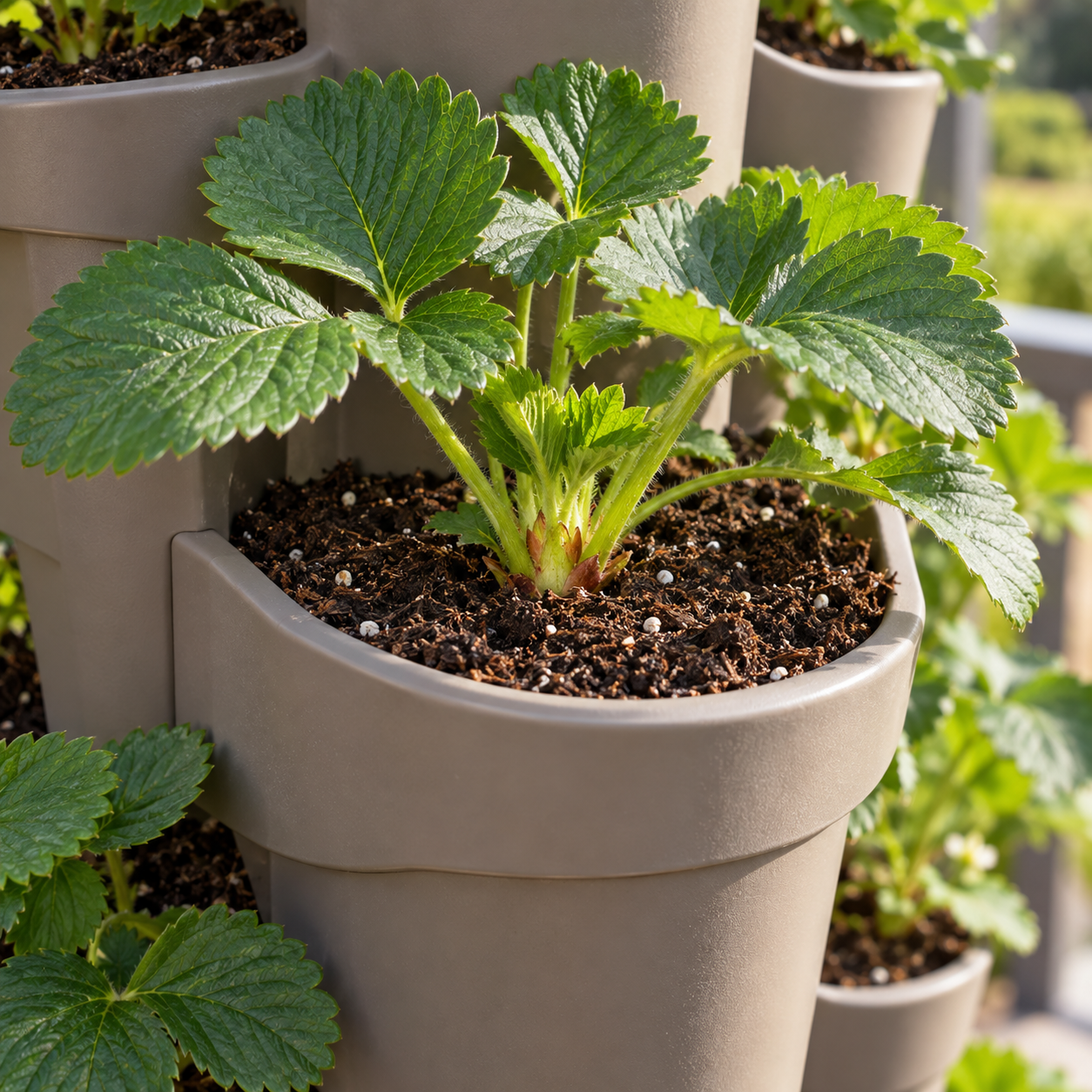
Choose healthy strawberry plants and put them in pockets you can easily reach and monitor. Plant each one at the depth it was growing in its nursery pot. The crown, where the leaves meet the roots, shouldn’t be buried under the mix.
Check those pockets often enough that they don’t repeatedly dry out, but don’t keep them soggy, either. If the plant sends out runners and your goal is to get berries from that plant, trim the runners so it can put more energy into growing and fruiting.
Give strawberries adequate sunlight while watching what happens to the tower in summer. Here in Texas, a small plastic pocket can get awfully hot in strong afternoon sun. A movable planter gives you the option to find a spot with good light and some relief from the harshest heat.
And set reasonable expectations. The pictures of towers dripping with berries are enticing, but a handful of healthy plants that actually survive and produce would be a win in my book.
Don’t Forget to Feed What’s Growing
Plants in containers depend on what’s in their potting mix and what you add. Nutrients can wash out as you water, especially in a small planter that needs frequent attention.
Check the bag before adding fertilizer because some potting mixes already contain it. As the plants grow, use a fertilizer appropriate for edible container plants and follow its label. More isn’t better, and fertilizer won’t rescue roots that are drying out or sitting in waterlogged mix.
If a strawberry plant has lots of leaves but no berries, look at the whole picture before feeding it again. Is it established? Is it getting enough light? Is it producing runners? Is the weather right for the type of strawberry you planted? Those questions matter just as much as what’s in the fertilizer.
Plant for the Season
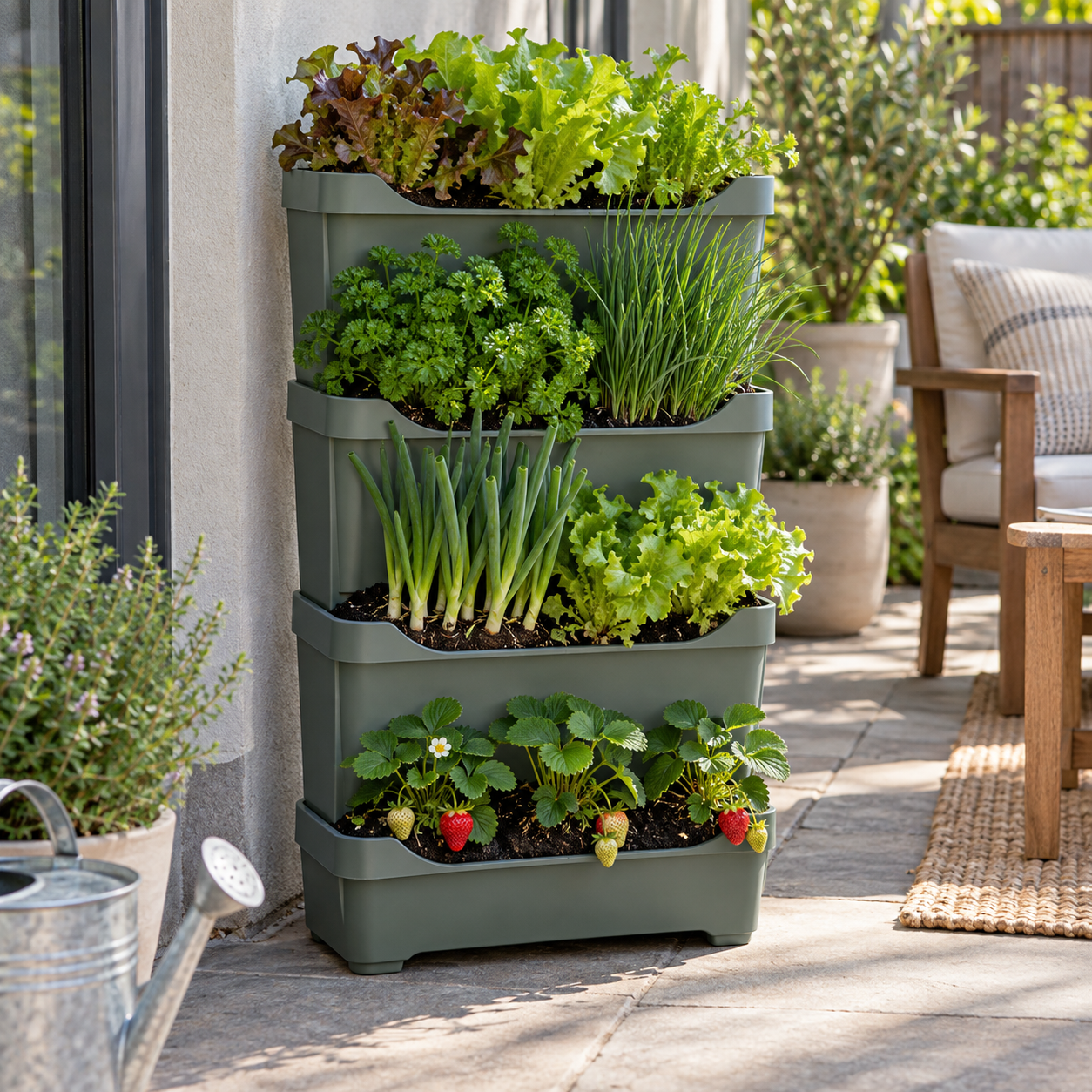
One of the nicest things about a stackable planter is that you can change what grows in it through the year. You don’t have to find one combination that lasts forever.
For me, cool weather is a good time to try salad greens, parsley, and perhaps another small group of strawberries. As the weather warms, I can switch some pockets to basil and other warm-season herbs. When the heat becomes too much for tender greens, I can stop trying to force them through a Texas summer and plant again when conditions improve.
That sounds more useful than filling the tower once, watching everything struggle, and deciding the whole planter doesn’t work.
How I’m Going to Start Over
I’m going to clean out my planter, give it fresh potting mix, and test the watering before I buy another tray of strawberry plants.
Then I’ll plant a few strawberries where I can keep a close eye on them. I’ll use some other pockets for greens and herbs that suit the season, and leave any pockets empty if they’re too small or don’t water well.
Most of all, I’ll check the individual pockets. If the same ones keep drying out, I can water them directly or change what I grow there. If a pocket stays wet, I’ll check its drainage. That gives me something I can actually fix.
A stackable planter can be a handy little food garden, but it still needs the basics: enough room for the plants you choose, good potting mix, drainage, steady watering, nutrients, and the right weather. I’d rather harvest a bowl of lettuce and a few strawberries from healthy plants than keep buying strawberries for a tower that looks great in pictures.
If you’re thinking of trying one, this stackable planter is an example of the style I’m talking about. Mine is smaller and narrower, so take a close look at the size of the planting pockets and how a planter distributes water before you decide what to grow in it.
🛒 Shop My Favorite Gardening Finds
Looking for the products and tools mentioned in my blog posts and YouTube Gardening videos?
Visit my Amazon shop to see everything in one place.
Shopping there is free and the site gets a percentage of sales. Thanks!


Leave a Reply