Tomato leaves don’t curl for no reason.
And this is one of those problems that’ll send you straight down a rabbit hole if you’re not careful.
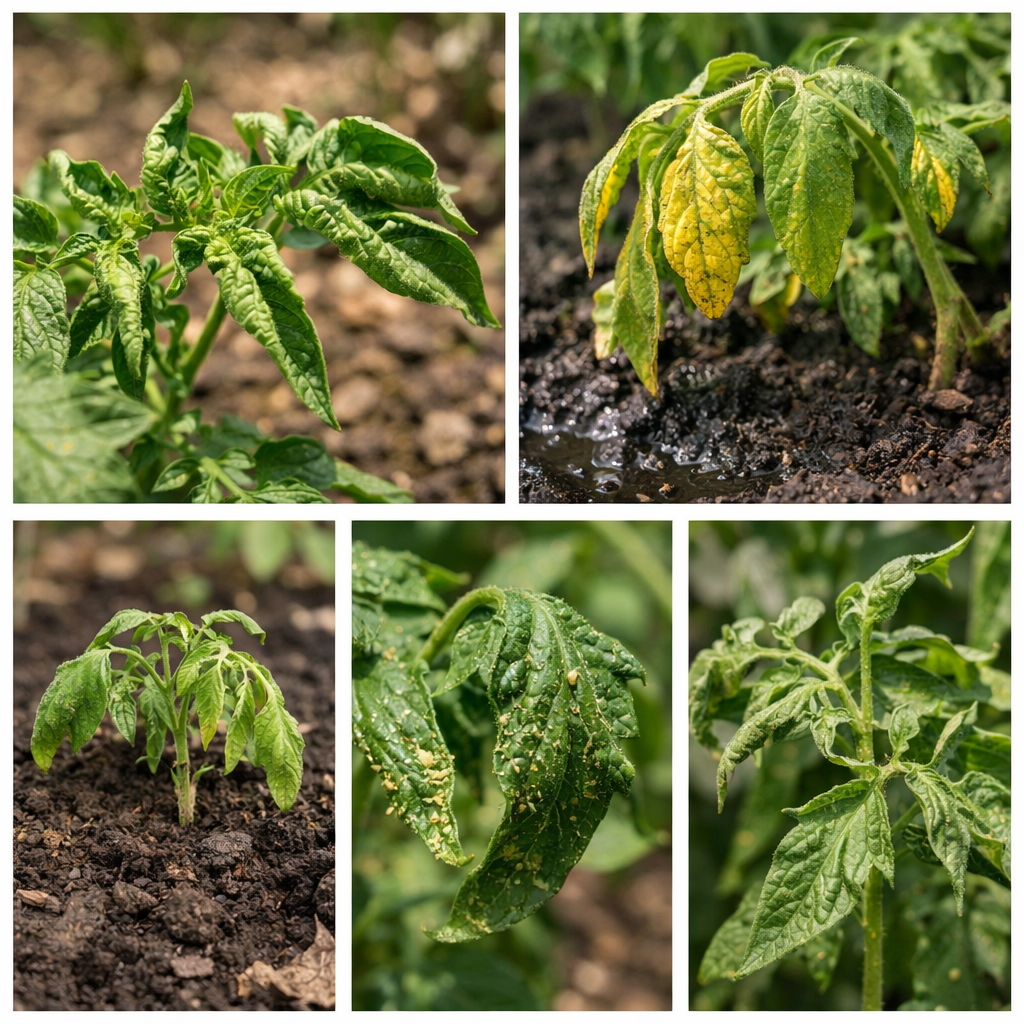
Why Your Tomato Leaves Are Curling (And What It Means)
One person says ignore it.
Another says you’re overwatering.
Someone else swears it’s a disease.
Meanwhile, your plant just keeps looking worse.
So instead of guessing, let’s actually break it down so you can figure out what’s going on and fix the right thing.
First – Look at HOW They’re Curling
Before you touch anything, this matters more than people think.
Take a second and look closely:
- Are the leaves curling up or down?
- Are they twisted or just rolled?
- Is the plant still growing or kind of stalled out?
That tells you where to start.
1. Heat Stress (Most Common)

If the leaves are curling upward like little taco shells, this is usually it.
What’s happening:
- The plant’s trying to protect itself from too much sun
- It’s reducing surface area so it doesn’t lose as much water
You’ll usually notice:
- Leaves still look green
- Plant is still growing
- Happens in the heat of the day
What to do:
- Water deeply instead of constantly
- Add mulch if you haven’t
- Give a little shade if it’s really hot
This one looks scary, but it usually isn’t a big deal.
2. Overwatering or Root Stress
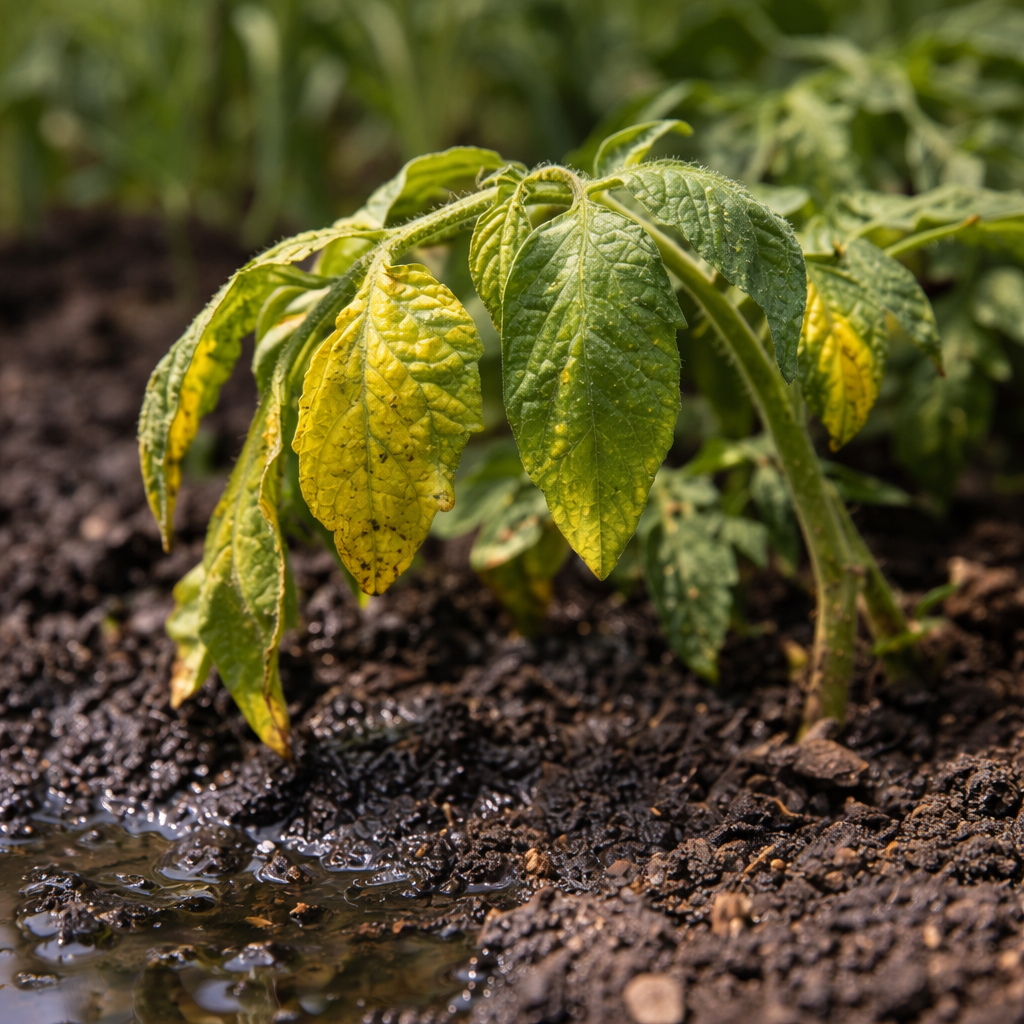
If the leaves are curling downward and feel soft or droopy, pay attention.
What’s happening:
- The roots aren’t getting oxygen
- The plant is basically suffocating
Look for:
- Droopy curled leaves
- Yellowing starting
- Soil staying wet too long
What to do:
- Stop watering for a bit
- Let the soil dry out
- Fix drainage if needed
This is where people make it worse by watering more.
3. Transplant Shock

If you just planted them, this is high on the list.
What’s happening:
- Roots are adjusting to new soil
- The plant is stressed and reacting
You’ll usually see:
- Curling and drooping
- Slowed growth
- Shows up within a few days of planting
What to do:
- Leave it alone
- Keep watering consistent, not excessive
- Give it a few days
Most plants bounce back if you don’t mess with them too much.
4. Herbicide Drift

If the leaves look twisted, thin, or just plain weird, this isn’t watering.
What’s happening:
- Weed killer drifted from somewhere nearby
- Tomatoes are super sensitive to it
Look for:
- Warped, distorted growth
- New leaves looking the worst
- Almost stringy or stretched leaves
What to do:
- You can’t really fix it
- Remove badly damaged plants if needed
- Be careful about spraying nearby
This one gets misdiagnosed all the time.
5. Pests or Disease

If you see curling plus spots, bugs, or discoloration, dig deeper.
What’s happening:
- Something is feeding on the plant or interfering with growth
Look for:
- Tiny bugs under leaves
- Sticky residue
- Yellowing or spotting
What to do:
- Identify the exact problem first
- Then treat that specific issue
Don’t just start spraying everything. That usually makes things worse.
Feeling Stuck? This Is Where It Goes Sideways
Most gardeners don’t mess up because they don’t care.
They mess up because:
- Everything looks the same at first
- Advice conflicts everywhere
- They try multiple fixes at once
And that’s when things go downhill.
Start Here Instead of Guessing
👉 Common Gardening Troubleshooting Guide
This helps you match what you’re actually seeing before you do anything.
Then Fix It the Right Way

That’s where you can:
- Match leaf symptoms visually
- Figure out exactly what’s wrong
- Fix it without guessing
What To Do Next
Don’t try to fix everything at once.
Look at your plant again.
Pick the most likely cause.
Fix that one thing first.
That’s how you get it turned around before it gets worse.

🛒 Shop My Favorite Gardening Finds
Looking for the products and tools mentioned in my blog posts and YouTube Gardening videos?
Visit my Amazon shop to see everything in one place.
Shopping there is free and the site gets a percentage of sales. Thanks!


Leave a Reply