Starting seeds indoors sounds easy until the tray starts looking sad.
Everything sprouts.
Everything looks promising.
Then suddenly the seedlings are tall, thin, leaning, and acting like they need a tiny walker.
One day they look fine.
The next day they’re stretching toward the light like they’re trying to escape the tray.
That’s the part that drives people nuts.
Because it feels like something mysterious went wrong, when most of the time it comes down to a few basic setup mistakes. Not bad seeds. Not bad luck. Just setup.
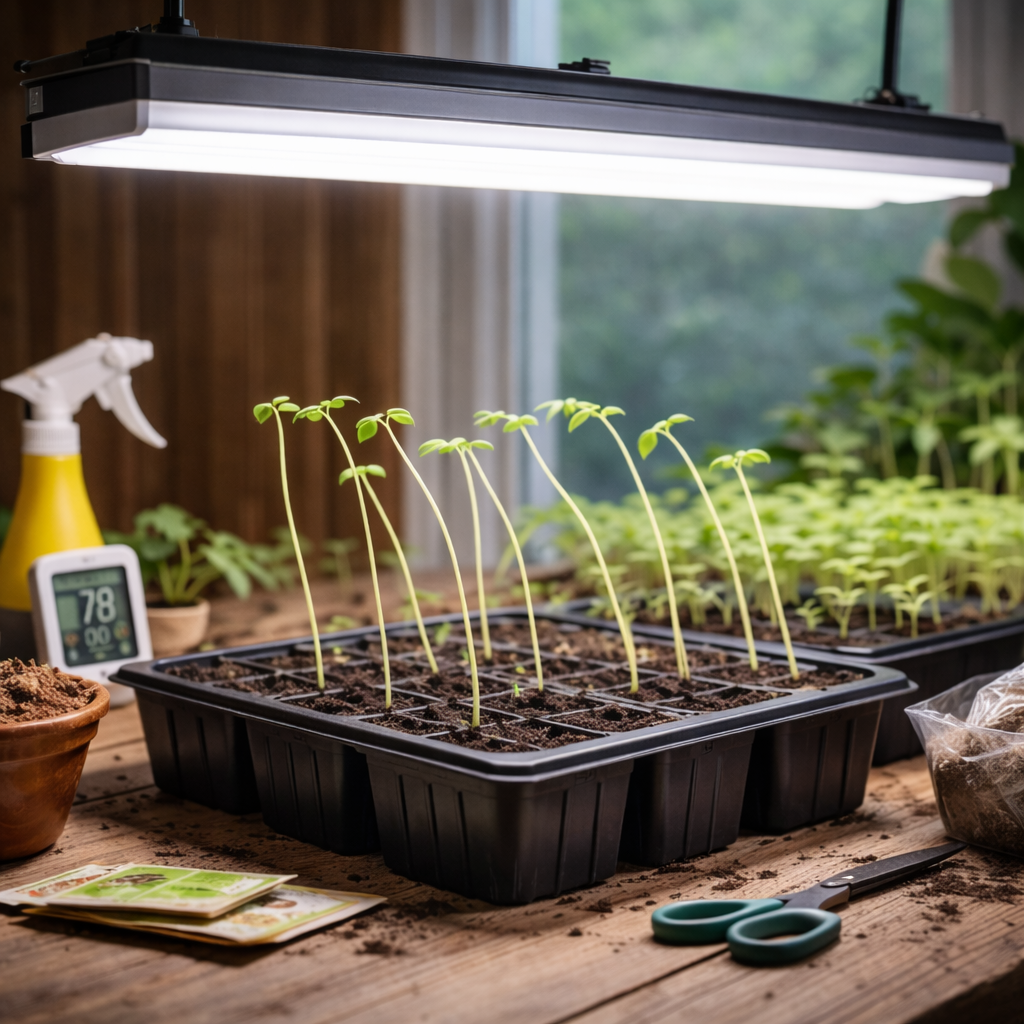
Why Your Seedlings Get Tall and Floppy (Leggy Seedlings) – And the 3 Setup Mistakes That Cause It
The good news is that leggy, weak seedlings usually point back to something simple you can fix.
Most of the time it’s one of three setup issues – light distance, watering conditions, or airflow.
If you’re starting seeds this season, it helps to check these things before you plant anything. This quick free printable walks you through the exact setup most gardeners miss:
🌱 Seed Starting Setup Checklist
A two-minute setup check now can save an entire tray of seedlings later.
3 Seed Starting Mistakes That Cause Leggy Seedlings
When seedlings get tall and floppy, they’re usually stretching.
They’re trying to reach what they need, and what they usually need is light.
Instead of growing thick and sturdy, they shoot upward too fast, which leaves them weak at the stem.
That weak growth can snowball fast. One day they look a little too tall. The next day they’re bent over and acting like the season is already over.

Mistake #1 – The Light Is Too Far Away
This is the big one.
If your grow light is too high above the seedlings, they stretch to reach it. That’s exactly how you end up with long, spindly stems that can’t support themselves.
Seedlings need the light close. Not somewhere in the general zip code. Close.
A lot of people set the tray up, hang the light, and then leave it there. But seedlings grow fast, and the light needs to stay just above them as they do.
If your seedlings are already stretching, this is the first thing to check.
The 🌱 Seed Starting Setup Checklist includes the basic setup details that matter most before you ever plant a seed.

Mistake #2 – The Soil and Water Setup Is Working Against You
Bad setup isn’t always dramatic.
Sometimes the problem is the soil holding too much moisture.
Sometimes it’s watering too often.
Sometimes the mix is too dense and the roots never get what they need.
Weak seedlings don’t just come from poor light. They also come from soggy conditions, poor airflow, and roots that are struggling under the surface.
Temperature can also play a role. Warm soil combined with low light often causes seedlings to grow quickly but weakly.
That’s why seedlings can look alive but still not look right.
They’re up, but they’re not strong.
They’re green, but they’re not thriving.
That’s also why the setup matters so much. The wrong watering pattern and poor air movement can quietly wreck a tray before you realize what’s happening.

Mistake #3 – No Airflow Means No Strength
This one gets skipped all the time.
Seedlings need gentle airflow if you want them to build strong stems.
Without it, they stay soft and weak. They don’t have any reason to toughen up.
Even a small fan nearby can make a big difference.
This is one of those little details that doesn’t seem important until you compare two trays side by side and one looks sturdy while the other looks like it needs emotional support.
That kind of thing matters.
Why This Gets More Expensive the Longer You Wait
This is the real issue.
Seedling problems usually don’t stay cute for long.
A little stretching becomes a tray full of weak plants.
A little weakness turns into collapse.
Then you’re replanting.
And replanting doesn’t just cost seeds. It costs time.
That’s where the paid guide comes in – because once seedlings start stretching, the clock is ticking. The faster you correct the setup, the better chance those plants have of recovering.
If your seedlings are already acting up – stretching, leaning, or falling over – the 🌿 Seed Starting Emergency Fix Guide is the fastest way to diagnose the problem and correct it before you lose the entire tray. It helps you match the symptom, figure out what caused it, and fix it fast before the whole tray goes downhill.
When the Problem Goes Beyond Seed Starting
Sometimes the issue is not just the tray.
Sometimes the real problem shows up later in the garden.
Plants survive, but they never really produce.
They grow, but not well.
They look okay from a distance, but harvests are disappointing.
That’s why this freebie exists too:
🪴 Your Garden Looks Fine. So Why Isn’t It Producing?
It helps spot the hidden problems that make a garden look decent while quietly underperforming.
And if you want the full deeper fix for those bigger garden issues, that’s where 📋 What’s Holding Your Garden Back comes in.
What To Do Right Now
If your seedlings are still in the setup stage, start with the free checklist.
Use it before you plant.
If your seedlings are already stretching, leaning, yellowing, or looking weak, get the emergency guide and fix the problem now instead of waiting until the tray is past saving.
If you want the short version of what helps most gardeners fix this fast, start here:
🌱 Seed Starting Setup Checklist
🌿 Seed Starting Emergency Fix Guide
🪴 Your Garden Looks Fine. So Why Isn’t It Producing?
📋 What’s Holding Your Garden Back
Common Questions About Leggy Seedlings
Can leggy seedlings be saved?
Sometimes, yes. If the problem is caught early, moving the grow light closer and improving airflow can help seedlings strengthen up. In some cases, seedlings like tomatoes can be replanted deeper so the stem develops new roots.
How close should grow lights be to seedlings?
Most seedlings do best when grow lights are about 2–3 inches above the tops of the plants. If lights are too far away, seedlings stretch upward looking for stronger light, which causes tall, weak stems.
Will leggy seedlings survive outdoors?
Weak seedlings can sometimes recover once they are planted outside, especially if they receive strong sunlight and good airflow. However, extremely thin seedlings may struggle to support themselves and produce well.
Do seedlings need a fan?
Yes. Gentle airflow helps seedlings develop stronger stems. Even a small fan running nearby for a few hours a day can make a noticeable difference in plant strength.
Final Thought
Most seedling problems aren’t random.
They’re signals.
And once you know what those signals mean, you stop guessing and start fixing.
That’s when seed starting gets a whole lot less frustrating.

🛒 Shop My Favorite Gardening Finds
Looking for the products and tools mentioned in my blog posts and YouTube Gardening videos?
Visit my Amazon shop to see everything in one place.
Shopping there is free and the site gets a percentage of sales. Thanks!


Leave a Reply