If you read the Bible and you like plants or gardening, you start noticing just how much is growing in Scripture.
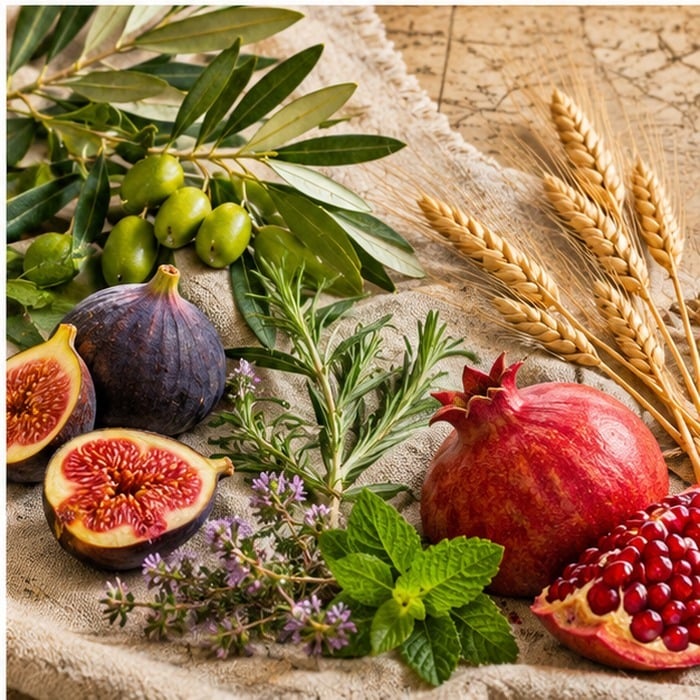
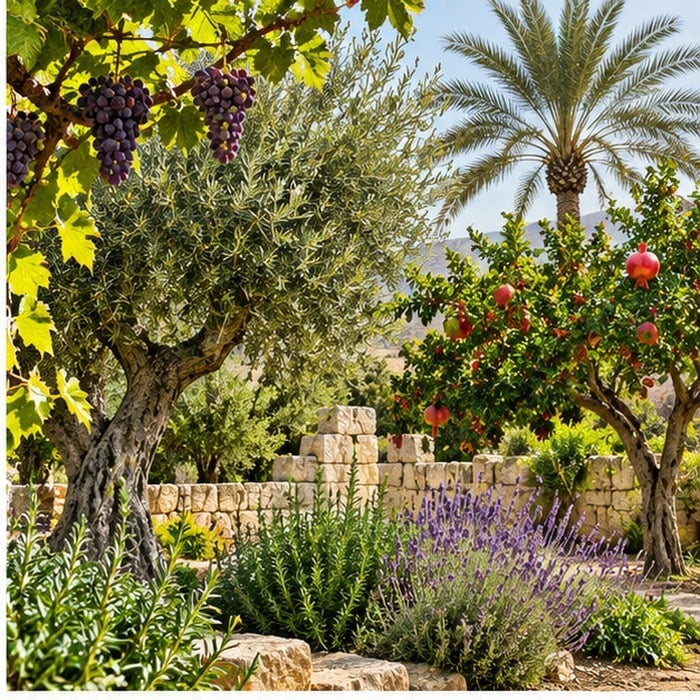
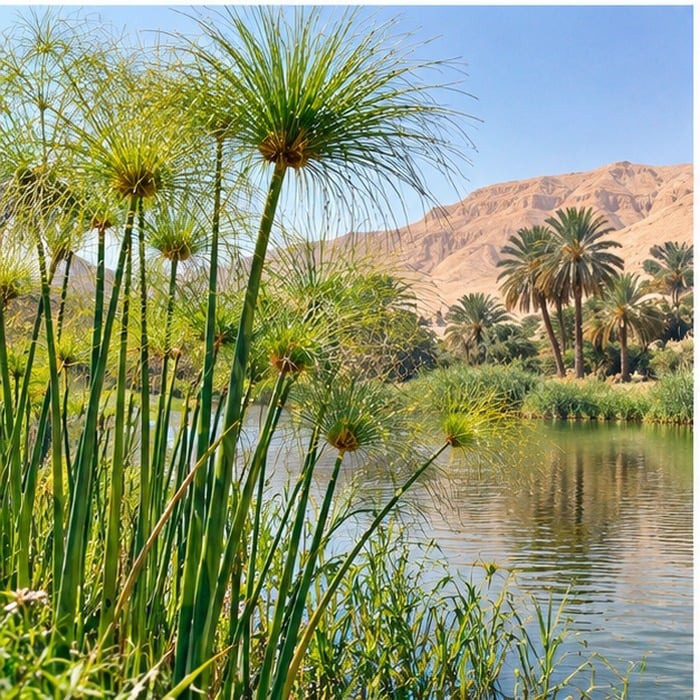
Olive trees. Figs. Grapevines. Pomegranates. Papyrus. Acacia. Spices, grains and plants that were part of ordinary life in the ancient world show up over and over again.
The funny thing is that we can read right past them because most of us don’t live in a place where an olive grove, a papyrus marsh or a pomegranate tree is part of the scenery outside the window.
Plants of the Bible: A Beautiful Book for Gardeners
That is what makes Plants of the Bible by Florence Thinard and Marie-Jose Thinard so interesting. It takes more than 45 plants mentioned in the Old and New Testaments and looks at the history, symbolism, geography and everyday uses behind them.
It’s a 160-page hardcover reference book, but it doesn’t feel like a dry encyclopedia. It’s very visual, with botanical photography, historical artwork, maps and plant profiles that make it easy to pick up and browse a few pages at a time.
This Is More Than a List of Plants Mentioned in the Bible
I think this is the part that makes the book useful even if you already know that olives, figs and grapes are in the Bible.
The book doesn’t simply tell you that a plant appears in Scripture and move on. The individual profiles dig into things such as:
Where the plant grew and where it came from
Its Hebrew name and meaning when applicable
Where it appears in Scripture
How people in the ancient world used it
Its symbolic or religious significance
Historical and cultural context
Maps showing biblical regions and plant origins
Some practical information for identifying or growing the plant today
That extra context is what can make a plant you’ve read about a hundred times suddenly feel less like a word on a page and more like something that belonged to a real place and a real way of life.
Plants You Already Know – With a Lot More Context
Some of the plants in the book will be immediately familiar even if you’ve never given them much thought beyond the Bible passage where they appear.
The publisher highlights plants including the olive, pomegranate, papyrus and acacia, and sample pages also show entries on figs and cinnamon.
Those plants weren’t just decorative scenery. They could be food, building material, medicine, fragrance, trade goods or part of religious and everyday life.
Knowing that doesn’t change what Scripture says, but it can help us better picture the world the people in Scripture actually knew.
Why the Plant Details Can Make Scripture Feel More Real
When the Bible was written, nobody needed a footnote explaining what an olive tree looked like or why olives mattered. The original audience lived much closer to that world.
We don’t.
So a reference like this can fill in some of those little gaps without turning Bible reading into homework.
If a passage mentions a plant you’ve never seen, you can look it up. If you’ve always wondered why a particular tree, fruit or spice keeps appearing, you can read its profile. If you’re a gardener, you may simply enjoy seeing how many plants we still grow today have histories reaching back through biblical times.
I especially like that the book combines the biblical references with actual botanical information instead of treating the plants only as symbols.
The Maps and Artwork Make This Easy to Browse
This is a fairly large hardcover book – about 9 1/4 by 11 1/4 inches – so it has more of a visual reference-book or coffee-table-book feel than a little devotional you would tuck into a purse.
That larger format makes sense because the book includes maps, botanical photographs and historical artwork along with the text.
You don’t have to start on page one and read straight through to page 160. You can flip to a plant that interests you, read a few pages, look at the images and come back to the rest later.
That’s actually how I think most people will enjoy this one.
This Is Not Really a Gardening Manual
There are some practical notes about identifying or growing biblical plants in today’s landscapes, but I wouldn’t buy this expecting a step-by-step guide to planting an entire Bible garden.
Gardening information is part of the book, not the whole book.
It’s also not a traditional devotional or a verse-by-verse Bible study.
It sits somewhere in the middle of Bible reference, botany, history and gardening, which is exactly what makes it unusual.
Who Would Like Plants of the Bible?
This is one of those books that crosses over into several interests, so I can think of quite a few people who might enjoy it:
Bible readers who like learning historical and cultural background
Gardeners who also enjoy Scripture
Pastors and Bible teachers
Bible study leaders
People interested in biblical history
Homeschooling families studying the Bible or the ancient world
Anyone interested in how people used plants for food, medicine, trade and worship
It could also be a really nice gift for the person who already owns plenty of Bibles and Bible studies and is hard to buy for because this approaches Scripture from a completely different direction.
If that sounds like someone on your list, you can take a closer look at Plants of the Bible on Amazon and see the current price and availability.
The Authors Have an Interesting Background Too
The authors are Florence Thinard and Marie-Jose Thinard, and their backgrounds help explain why the book mixes history, language, science and gardening the way it does.
Florence Thinard studied history, political science and international relations and later worked as a journalist and documentary writer.
Marie-Jose Thinard was a science and mathematics teacher and later studied biblical languages including Hebrew, Syriac and Greek while continuing her own interest in gardening.
That combination makes a lot of sense once you see what the book is trying to do. This isn’t just botany and it isn’t just Bible commentary. It’s looking at the plants from several directions at once.
What I Would Know Before Buying It
This is a substantial hardcover book, not a small inexpensive paperback. The publisher lists it at 160 pages with a large-format design, so it’s meant to be something you keep and refer back to.
If you’re looking strictly for a Bible devotional, this probably isn’t it.
If you’re looking strictly for instructions on how to grow olive trees and figs, this isn’t that either.
But if the part that interests you is the overlap between Scripture, plants, history and the world people lived in when the Bible was written, that’s where this book makes sense.
Would It Make a Good Gift?
I think so, especially because it’s a little different from the usual Bible gift.
Someone can own three study Bibles, five devotionals and an entire bookshelf of Christian books and still not have anything quite like a large illustrated reference on the plants of Scripture.
And for somebody who already loves to garden, the connection is pretty natural.
It would work for Christmas, a birthday, Mother’s Day, Father’s Day, a pastor or Bible teacher gift, or simply for somebody who enjoys having beautiful reference books around the house.
You can see Plants of the Bible here to check the current price, availability and ordering options.
🛒 Shop My Favorite Gardening Finds
Looking for the products and tools mentioned in my blog posts and YouTube Gardening videos?
Visit my Amazon shop to see everything in one place.
Shopping there is free and the site gets a percentage of sales. Thanks!


Leave a Reply